25 March 2010

Go Read Denveater's and My "Menu Writing: The Good, The Bad, The Excruciating"

Once in a while I get invited to do a guest stint on the blog of a fellow food writer. My latest, "Menu Writing: The Good, The Bad, The Excruciating" is a collaboration with my old friend Denveater: the ever readable, always funny, often provocative Denver-based food blogger.

Denveater and I start by expressing admiration for a few restaurant menus that rise above the great bloated bulge of the unextraordinary. But mostly we have fun busting on less-careful restaurateurs, servers, and industry pundit types for their fumbling and bumbling with menu prose, food item pronunciations, and usage of cooking terms. Here's a sample:

"antipasta for antipasto -- I heard this recently on the Boston-local TV restaurant 'review' show, The Phantom Gourmet. I wonder: if you were to order the the antipasta and the pasta and they arrived at the same time, would the universe explode?"

We had a ball writing this piece; hope you enjoy it, too!

27 February 2010

27 Really Terrible Boston Restaurant Names

Choosing a restaurant name has to be one of the most difficult and significant decisions a new restaurateur has to make. A lot is riding on it: the name represents the only opportunity many potential customers ever get to decide if the restaurant appeals to them in terms of its concept, atmosphere, price, and the other intangible qualities it may connote. So I'm always amazed when a restaurant chooses a really terrible name.

I'm not just talking about the widespread misapplication of bistro and trattoria, though that annoys the deuce out of me. Properly used, those terms denote rather specific forms of relatively humble restaurants in France and Italy, but in the USA, they're abused to mean practically anything. In Boston, they mostly get slapped on places that are too fancy and expensive to fit the traditional usage, and the offenders on that score are too numerous to mention. Rather, I'm here to cite the garden-variety-stupid, the what-the-hell-were-you-thinking, the where-were-your-friends-when-you-picked-that kind of restaurant naming awfulness.

So, herewith are a few notably bad Boston restaurant names from my personal Hall of Shame:
  • Mooo... -- A romantic luxury steakhouse making a cutesy, lame joke at cows' expense? And WTF kind of omission does that ellipsis represent? Maybe, "Mooo..., despite the tee-hee name, is located in XV Beacon, a $500-a-night Beacon Hill boutique hotel, and is every bit as costly and pretentious as you therefore might expect.”
  • Prose -- Actually a pretty good chef-owned small restaurant in Arlington, but the name leads you to expect the prosaic, not the lyrical, on the plate. This bit of self-sabotage is matched only by the chef's famously grumpy attitude toward customers.
  • KO Prime -- Winner for Most Ironic Name, as this expensive Downtown hotel steakhouse does not serve prime-grade beef, but the same choice-grade meat you can buy plastic-wrapped in Styrofoam trays at Johnnie's Foodmaster.
  • BOKX 109 -- "I know, honey, let's go to that cheesy 'Vegas-style steakhouse' in Newton named after a slaughterhouse term for a carcass container." “Oooh, yum-o!”
  • No Name -- The retirees on cut-rate package tours dining by the busload at this Waterfront tourist trap of a shore-food joint probably don't appreciate the dull irony of this moniker.
  • Basta Pasta – You'd think a pasta specialist would want to signal its abundant portions. "Nope! We're just Enough Pasta!”
  • Big Papi's Grille –Red Sox slugger David Ortiz is one of the most lovable sports personalities in Boston history, in no small part thanks to his epic contributions to ending the local nine's 86-year championship drought. But I think it was a mistake to telegraph his involvement in this place, as anyone with a lick of dining-out experience knows that restaurants owned by athletes usually underwhelm. Predictably, the reviews have been mediocre.
  • Strip-T's – It's hard to bust on a modest indie restaurant in Watertown, the kind of place that serves good American food with nothing over $15, but that name makes me gnash my teeth. Nobody equates hoochie dancing with fine dining.
  • Chung King Rick's Cafe -- A pitiable Billerica brown-sauce American-Chinese restaurant/townie bar, filled with customers who seem equally desperate for and hopeless of escape. "Of all the greasy-eggroll joints in all the towns in all the world, she walks into mine."
  • Boloco – This small local burrito chain didn't bother me until a fellow Chowhound pointed out that the name can be read as “bollock-o”. I'll wager that, despite the current rage in Boston for offal, the owners weren't trying to evoke the image of bull testicles. (The true etymology isn't much more appealing, an abbreviation of “Boston Local Company.” Bleh.)
  • uBurger – Actually a not-bad pun in the making (the German “über”, indicating superiority, crossed with “burger”), but nobody pronounces it as anything but “you-burger”.
  • Violators of my “dubious possessives in restaurant names” bugbear -- I documented this nagging peeve of mine on my blog entry, "But There Is No Mr. L'Espalier!". To quote that essay: “Is there really a Mr. Soya at Soya’s? Does a Ms. Zebra sit on the board of Zebra’s Bistro? I’d love to believe there’s a Pepper Sky running Pepper Sky’s Thai Sensation – she sounds like the star of a 1960s TV show about a secret agent who favors Mod fashions – but I suspect the truth is duller.” Add Harvard Square Spanish/South American/Central American whatsis Conga's to this shamefully growing list.
  • Island Hopper – A pretty passable Back Bay restaurant with a fun pan-Asian menu, but I wonder whether its Indonesian owner is aware of the usage of "hopper" in some quarters as slang for “toilet”.
  • Mamagoo's – Why call out a humble Fresh Pond sub shop? Because it used to be called “Mr. Magoo's”, presumably until it got a cease-and-desist letter from the lawyers at Columbia Pictures, which owns the old cartoon character. Change one letter, drop a period, and voila! You're no longer violating copyright law -- now you're “Mamagoo”. Um, ew.
  • Smoken' Joe's – I haven't tried this Brighton barbecue joint yet, but I cringe at that misbegotten spelling. I have to assume that “Smokin'” was taken, but that alternative looks dumber than Snooki.
  • Stork Club – I imagine this South End spot would like to attract the same multi-racial clientele that flocked to its predecessor, Bob's Southern Bistro. Guess it overlooked the fact that the original Stork Club, one of New York's most famous cafe-society nightclubs, was notoriously inhospitable to African-American celebrities. Oops. (Tip of the hat to esteemed fellow Boston Phoenix restaurant critic Robert Nadeau for spotting this unfortunate irony.)
  • Thaitation – A fine little Thai storefront in the Fenway with a nearly nonsensical tongue-twister of a name. What does the “-tation” stand for? Citation? (Might make sense, given the nearby parking situation.) Mutation? (Not so appetizing.) A play on “titration”? (Ugh: not a chem lab term!) Puzzling.
  • Pu Pu Hot Pot – A serviceable, very reasonably priced American-Chinese place in Central Square, but honestly, do we need to give twelve-year-olds another reason to snigger?
In the Stupid and Bygone category:
  • T.J. Scallywaggle's -- Winner, Cognitive Dissonance Division. Sounded like the kind of hideous chain restaurant that serves Steak Quesadilla Towers and Shrimp Poppers, was actually a vegan pizzeria. Its also-a-vegan-pizzeria successor Peace o' Pie may have a groaner of a pun for a name, but at least it's consistent with the presumed leftie-activist sensibilities of its owners and customers.
  • Apocrypha – As the name suggests, this extremely precious Needham restaurant has since been expunged from the canon of still-operating establishments.
  • INQ -- An awful Newbury Street restaurant with an equally-awful name, though not as gobsmackingly imbecilic as its successor, Luigi and Roscoe's @ INQ (also mercifully closed.) The legacy of naming inanity in this location continues to this day with Cafeteria, which reflects the owners' mistaken impression that putting air quotes around the name of a would-be chic hangout serving $12 Pineapple Cosmos is ever-so-fascinatingly droll.
In the Not As Dumb As It Sounds category:
  • Moby Dick – I'd originally guessed that this Persian kabob joint near Symphony Hall was a seafood place in its prior incarnation, and the owners simply were too cheap to get a new sign. Wrong: it turns out there's a famous restaurant in Tehran by this name, which also inspired the popular DC-area Moby Dick House of Kabobs chain.
  • Bull McCabe's -- The name of this sweet little Irish pub in Union Square (Somerville) sounded to me like the kind of casual-dining hellhole that Anthony Bourdain would call "TGI McFunster's". This just proves I'm not so well-read: in fact, it refers to the protagonist of beloved Irish author John B. Keane's play The Field.
  • Lord Hobo -- Several friends urged me to flay the name of this Cambridge beer-geek bar for verging on mocking the homeless, but I consider it a different animal. To me, it evokes a quaint, possibly rural British pub, echoing an ancient English tradition of consciously quirky public-house names. Further, I admire its marketing effectiveness: the name alone has engendered a lot of discussion, which I'll speculate was partly the owner's intent. In other words, deliberately vs. unintentionally unseemly is a non-trivial distinction.
At least Bostonians can take solace in the fact that, despite the howlers I've cited here, we have nothing as patently, crudely nudge-nudge-haw-haw as Crabby Dick's (a Delaware seafood shack), Phat Phuc Noodle Bar (a London Vietnamese restaurant which I'm certain was not named to honor its literal translation, “Happy Buddha”), or The Money Shot (a Chicago comfort food joint). As for my not making any more cheap jokes here, you're welcome.

12 January 2010

From the Archives: Five Reasons to Dine at the Bar

I'm republishing a piece here from June 2005 that hasn't been available online for years. This one is special to me: it's the first food/drinks story I ever published professionally, a cover feature for Stuff Magazine (then known as Stuff@Night) on why bar dining is often superior to a table in the dining room. See if you think it still holds up.

FIVE REASONS TO DINE AT THE BAR
by MC Slim JB
[originally published as the cover feature of the June 9, 2005 issue of Stuff@Night]

As a longtime Bostonian who loves to dine out, I struggle with conflicting goals. I want to eat well, but can’t afford to patronize luxury establishments every week. Fast food is cheap and tasty, but I hate the nausea and regret a half-hour later. One of my best strategies is to frequent mid-priced places and dine at the bar. It’s low-fuss, you often get better food and service, and it’s friendly and fun, especially if you’re dining solo.


My Belly Doesn’t Need Ms. Right; It Needs Ms. Right Now


There are few civilized pleasures as sublime as the two-hour-plus weekend prime-time dinner. Consider Union Bar and Grill, one of the South End’s sleeker, more well-oiled dining entertainment machines. Sliding into a glossy banquette for a Friday 8pm reservation, the four of us are a little dressed up and a lot revved up. We kick off with expertly-made cocktails, dulling the keen edge of hunger with the gratis cornbread and excellent butter.

We uncork a Chianti Classico to go with appetizers of short ribs, beet salad, and chorizo-and-corn risotto. Next, we attack entrees of lamb rack, pork tenderloin, roast chicken, and codfish. We pause a bit to take in the scenery before lingering over a five-item cheese plate with perfect accompaniments, washed down with a couple of glasses of port and an espresso or two. By the time 11pm rolls around, we’ve passed an entire languid evening of very pleasant food and solicitous service, amplified by a little hot-spot atmosphere, for a mere $350.

While lovely, this pricey scenario doesn’t quite play on Wednesday night, when it’s just two of us wandering into Union at 9pm, looking not quite daisy-fresh in rumpled work clothes, feeling irritable with stress and hunger. This moment calls for our light, tight, weeknight strategy:
  1. Pass on the hosts’ offer of a ready dining room table in favor of bar seats.
  2. Get a beer, a glass of wine, and two sandwich plates – a hefty Rueben and an Andouille-flecked hamburger with excellent frites. Appreciate the real care in the preparation (a burger actually cooked medium rare as ordered, and mmm, those frites).
  3. Wrap it up in under an hour, for about $50 including tax and tip.
  4. Feel good about minding our mid-week budget, avoiding delivery of bad Chinese or pizza, and not dreading the alarm-clock detonation we face in a few hours.
  5. Congratulate ourselves on being frugal, canny urban diners-at-the-bar.

My Folks Told Me Never to Talk to Strangers


There seems to be an unwritten rule at fine dining establishments in this town: you don’t chat much with nearby tables. Near as I can tell, there are two exceptions: 1) wishing someone a happy birthday or whatever occasion was just signaled by a candle-lit dessert (and hopefully, not a song); and 2) asking them what enticing plate just arrived at their table, so you can order it, too. At best, any other topic is likely to get you a look of polite forbearance that is clearly two seconds from curdling into disdain. We don’t mind looking at the pretty strangers next to us, we just don’t want them talking to us.

If you crave a little bonhomie with your steak-frites, you’ll have to dine at the bar. (This also applies to the comparatively rare communal table, but we’ll save that one for another time.) Maybe it’s that you are sitting close, or have better access to the social lubricant of alcohol, but bar diners converse far more easily than their dining-room counterparts.

Consider my recent visit to Dedo, a year-old little sleeper of a New American restaurant near Park Square. I come looking to sample the cuisine of its new chef, Jason Santos, whose work I admired at Tremont 647. Dedo serves some great-looking small plates in the bar, but not in the dining room. I love the Spanish custom of nibbling tapas early in the evening, so I opt for the bar.

It isn’t long before the parade of little bites I’ve ordered gets my neighbors sharing dining-out stories with me. Everyone oohs at my “cappuccino” of sweetbreads and black truffles in a stiff sauce and a blanket of chestnut foam, served in a china latte cup. Despite the precious presentation, it’s a rocking little stew, a minor symphony of richness and slightly spongy textures. I marvel at the deviled eggs (here, done with tuna sashimi for filling, with nary a hint of mayonnaise), and recall other favorite versions (Mom’s, which hews to the circa-1960 Good Housekeeping canon, and Oleana’s, which adds poached tuna and olives to the filling.) A businessman from L.A. boasts of the dining palaces out West he’s visited while chasing the perfect poke (pronounced “pokey”), a raw tuna salad of Hawaiian origin – he rates Dedo’s very highly.

While we talk mostly of food that night, the scenario echoes a thousand similar moments I’ve enjoyed: a few strangers holding a friendly debate over dinner on the finer points of baseball, movies, music, drinking, and/or the attractiveness of the bar’s other patrons. What’s nearly taboo in the dining room is welcome in the bar. I’ve made many pleasant acquaintances and business connections this way, enjoying what might otherwise have been a dull hour or two. Actually interacting with your fellow man: it’s one of simplest and most accessible pleasures of dining at the bar.


The Best Server in the Room


In a handful of places in Boston, the bartender is such a multi-talented, genial host that you hate to hazard the dining room. Joe Carbonaro at Caffe Umbra is one of these, the rare barman who can deftly juggle responsibilities -- mixologist, wine steward, waiter, busboy, raconteur, and confidante -- and make it look easy, with grace and aplomb, like a professional athlete.

I rate him the best pure bartender in the South End (no faint praise -- there’s a lot of talent with shakers nearby): he just plain pours a beautiful drink. He crafted the restaurant’s signature cocktail menu, placing his own stamp on the classics, like a Negroni punched up with Punt e Mes. He’s on intimate terms with the wine list, quick with thoughtful food-and-wine pairings, slow to push the most expensive stuff, able to hold forth on esoteric dessert wines. That’s in between making drinks for everybody in the place, and serving dinner in the bar.

Joe approaches the food side of the job with similar seriousness and relish. He’s a subtle and effective salesman for Laura Brennan’s innovative rustic Italian and French cuisine, telling you exactly what he loves about each dish. He shows a Sicilian-American’s appreciation of the simple, beautiful ingredients on most plates here, like the asparagus shoots that accompany a torta appetizer. Despite a trim frame, he affects a gourmand’s lust for the pastry chef’s work. “You didn’t order this, but you have to – it’s off the charts”, say Joe of one of several nightly homemade ice creams, a melon-Sambuca number. We trust him, despite the unseemly combination. He’s right: it is spectacular, with a big upfront melon zing that fades almost completely to make way for an extended anise finish. Strange and utterly wonderful. Thanks, Joe!

Not to knock the dining room staff at Caffe Umbra; I’ve eaten in the back many times, and they too are skillful, polished and personable. But they’re not as much fun to watch work, and aren’t in the same position to regale us with stories about neighborhood goings-on. The wait staff doesn’t have the dedication to the art of tippling to solicit patrons’ opinions on the latest crazy super-premium liquor to hit the market (anyone for a sample of the new cherry-flavored rye?). If it’s Joe’s night off, or there are no seats at the bar, we head someplace else. We can barely imagine eating any other way there anymore.


The Food Here Sucks, Let’s Eat at the Bar


My beloved is giggling at a laptop in the next room. “What’s so funny?”, I call out. “Oh. My. God. Have you seen the glamour photos of Todd English on toddenglish.com?” “Yeah,” I reply: “Don’t hate him because he’s beautiful. Hate him because he’s too busy flogging his latest casino venture to stand at a stove in the town that put him on the map.”

Maybe that’s not fair; Todd probably does don a toque occasionally hereabouts, but I know few once-rabid fans like myself who aren’t in mourning for the days, now more than a decade past, when he was the deserving, white-hot focal point of the Boston fine-dining scene. The Charlestown Olives created some of the most exciting food I’d ever seen, and served it up with real verve, the kind of experience for which we’d tolerate a hateful no-reservations policy and two-hour waits in the packed bar. Currently, that kitchen cranks out obviously premade, not-always-fully-reheated appetizers to a crowd of undiscriminating tourists. Latecoming locals must wonder what all the fuss was about.

Worse still are lackluster outliers of the English empire like Bonfire, a steakhouse that has Todd’s brand but none of his formidable virtues (I’m talking about cooking, not marketing.) My several underwhelming meals here have featured grotesquely oversized slabs of over-charred pork and beef, brought by staffers who seem mightily self-impressed for no reason related to their actual service skills. I think the dining room looks fantastic – I’ll admit to a soft spot for that Phillipe Starck-designed bordello vibe -- and I admire the wine list’s South American depth. But the food regularly disappoints, at really high prices. I just kind of hate it.

But I join Bonfire’s often-lively bar scene on occasion, resisting the staff’s insistent promotion of their over-sugared travesty of a Caipirinha. To my bemusement, the same kitchen that fails in the dining room succeeds in the bar, where it serves up lip-smacking tacos and small plates like tempura green beans. Even better, you can get these nice-priced gourmet snacks at an hour when few places in the Back Bay are still hopping (till 1:30am Wednesday through Saturday).

I haven’t forgiven Todd for big-timing his local former devotees. But late-night grazing at Bonfire’s bar does help me to forget for a moment how success spoiled a one-time favorite. “Gimme an El Tesoro Plata margarita straight up, please, and some smoked-duck taquitos -- hold the Vanity Fair spread.”


Don’t Look at the Pitiful Lonely Freak -- Maybe He’ll Go Away


Business travelers, stop me if you’ve heard this one: after a long workday in a strange city, you let your hosts go home to the bosom of their families for dinner. You’ve done enough homework to dodge the room-service turkey club: trusted local sources have pointed you to some worthy restaurants. A quick taxi ride later, and you’re greedily surveying an interesting menu, proud to be an intrepid, globetrotting epicure.

But before the appetizer arrives, you notice the unwelcome glances. That mooning, hand-holding couple across the aisle give you matching tight smiles that say, “Someday, modern medicine will cure your scrofula or whatever it is that keeps you in your sad prison of one.” The wary glares from the next booth’s klatch of sharply-turned-out young professional women send a rather different message: “Look at us again, pervert, and we’ll stone you to death with our teeny cellphones”. Mercifully, you have a paperback to bury your nose in, thus avoiding further eye contact.

Now the weird part: the next time you’re out to dinner in Boston with a group of your attractive friends, you espy some poor benighted soul at a table for one. And despite having walked several miles in those moccasins, your first thought is, “Oh, the poor leper! Why didn’t the maitre’d just lead her quietly out back where she could shoot herself?” Remember this moment the next time you’re out on your own. Preserve your dignity, and avoid harshing the buzz of diners who are trying to share laughter and witty conversation as well as fine food and drink. Eat at the bar. You already have enough other good reasons to do so. FIN

N.B. After this was published, women friends of mine pointed out that solo bar dining doesn't work nearly as well for women as men -- that unwelcome attention from boys on the prowl is often an unfortunate consequence of sitting at the bar without a companion. Shame on me for not considering this issue and mentioning it. (It was my first feature.)

N.B. 2 Special thanks once again to Scott Kathan of Stuff@Night for plucking me from the ranks of amateur reviewers on Chowhound.com and giving me my first shot at writing professionally! I've published hundreds of pieces since, and now write food/drinks features and two Boston restaurant-review columns (On the Cheap and Food Coma) for The Boston Phoenix and Stuff Magazine. See my blog for links to most of my professional work.

21 December 2009

The 2009 Devil's Dining Awards

I handed out a lot of recognition to Boston restaurants and bars in 2009: the annual Stuff Magazine Dining Awards; a Boston-centric “Ten Worst Dining Trends of the Decade” essay; and "2009: The Year in Cheap Eats", a year-end best-of list from my "On the Cheap" column for The Boston Phoenix. Seems like there's never enough room to shower kudos on every restaurant that deserves it: ditto the loud raspberries that ought to be sprayed at the crass, the ridiculous, the fraudulent and the shameless. But my blog has no space constraints or gentler-minded editors, so herewith I present a few more citations at year's end: call them the Devil's Dining Awards.
  • Best new cocktail trend. Authentic Tiki drinks. Forget about Scorpion Bowls at the Hong Kong and Mai Tais at suburban Polynesian restaurants: craft cocktail bars like Drink and Eastern Standard are reviving the authentic, 30s-vintage Tiki-bar mixology of Don the Beachcomber and his heirs. This is not a trivial endeavor, requiring house-made infused syrups, fresh juices, and many obscure spirits and non-alcoholic ingredients, including a battery of unusual rums, pimiento dram, Cherry Heering, Velvet Falernum, etc. But the results are breathtakingly complex, beautiful, and potent. Kitsch plus craft equals serious fun.
  • Worst new cocktail trend. Bars aping the trappings of craft cocktail bars and speakeasies but forgetting to bring the craft. Golden Age cocktails on your drinks menu, Prohibition era décor, and passwords at the door aren't enough. Building a real craft cocktail program demands training, hard work, study, and commitment, much like a fine-dining kitchen. Here's a hint: if you don't know how to consistently make a decent Sazerac, what glass it should be served in, why you might use Cognac instead of rye, and why the hospitality with which you serve it is as important as how well you make it, you're a faker with a very short shelf life. Here's another hint: if local cocktail maven Lauren Clark of the inestimable drinkboston.com isn't writing favorably about you, you probably suck.
  • Saddest budget-restaurant closings. Oran Café, a homestyle Moroccan restaurant in East Boston that only lasted for an eyeblink; Uncle Pete’s, a fine little purveyor of barbecue in Revere that could not survive its owner/pitmaster's passing this year; Rangoli, the Allston restaurant that introduced dosas and other South Indian specialties to Boston; Reef Café, a fantastic Syrian joint in Allston that was the definition of family restaurant: mom in the kitchen, son out front; and Poppa B’s, the Mattapan soul food standout that served Boston's best fried chicken (and by extension its best chicken & waffles) – but at least will survive as a Codman Square takeout place.
  • Worst trend for occasion diners. The death of the restaurant dress code. Nowhere in Boston does this hurt worse than at L'Espalier, whose new landlord, the Mandarin Oriental Hotel, nixed a longstanding jackets-required rule. You can now spend $400 commemorating your silver wedding anniversary while staring at a table full of louts bedecked in Ed Hardy ballcaps, t-shirts, jeans and sneakers. One hopeful counter-trend, as recently reported in a New York Times feature, is that a younger generation, taking cues from pop-culture touchstones like Mad Men, is finding that a slightly nattier style distinguishes them favorably from older schlubs who can't be bothered to don a jacket. Here's hoping that inclination gains momentum: no one needs to see tracksuits and hoodies when they're dropping a bundle on a big-number birthday dinner.
  • Local restaurant blog of the year. The tandem of Boston Restaurant Talk and Boston's Hidden Restaurants, a trove of restaurant reviews, discussion boards, and news of Boston-area restaurant openings and closings. Required reading for anyone obsessed with finding (and writing about) hidden gems in Greater Boston. Marc also does a great job of covering restaurants in lesser-known stretches of New England beyond the 128 beltway.
  • Proof that the South End is over. The March arrival of Stephi’s on Tremont, an injection of bleached-blond Newbury Street faux-glamour into a once-colorful ‘hood already overrun with white-bread Chads and Muffys. Meanwhile, atmospheric inky-hipster hangout Pho Republique, an original trailblazer on now-restaurant-lined Washington Street, closed after eleven years of upholding the neighborhood's artier, funkier, more multi-culti heritage. Sic transit gloria.
  • Best replacement for a departed star. Trina’s Starlite Lounge. Cambridge and Somerville heshers and hipsters alike lamented the death of the Abbey Lounge, a unique hybrid of townie dive and live indie-rock club. Then an all-star lineup from renowned neighborhood-bars-with-great-food (like Silvertone, Highland Kitchen, and Audubon Circle) stepped in to create a retro-cool haven of lawnmower beers and casual Southern-inflected cuisine. Manny, I mean, Abbey Who?
  • Nose Cut Off, Face Spited Award. To the former landlord of Bella Luna, the Milky Way Lounge & Lanes, and Zon’s, whose 85% rent increase convinced Bella Luna and the Milky Way to relocate (sans tenpin lanes) to a splendid new space in The Brewery complex, and forced Zon’s out of business. Cunning revenue-enhancement plan there, fella.
  • Best use of a potato (tie). Tater tots at Garden at the Cellar and potato pancakes at Café Polonia. The lowly kiddie-meal croquette and the usually-soggy hash brown get exalted treatment at these two underpraised spots. In both cases, the result is ungreasy, crunchy outside, creamy inside -- tasty enough to mitigate a thousand freezer-case insults. Spuds got respect.
  • Jean-Paul Sartre Memorial “Hell is Other People” Award. To Lord Hobo, for the licensing tribulations it endured from its abutting neighbors and the City of Cambridge, who apparently believe that all bars should close at 10pm and only serve food. We presume these folks have forgotten the Windsor Tap, the frightening drug bar that used to occupy the spot where Lord Hobo now serves fine food, classy cocktails, and what may be Greater Boston's best lineup of craft beers. Ingrates.
  • Foie Gras Poutine Award for Extraordinary Food in an Unlikely Setting. To Pupuseria Mama Blanca, a superb little Salvadoran joint in a remote residential corner of Eastie, further camouflaged by operating in a space that looks like someone's house. Easy to miss it, but don't.
  • Best actual poutine. The so-called “mix grill sausages” at Pops Restaurant in the South End, which tops beautiful hand-cut fries with cheese curds, short ribs, and sausages of rabbit, duck and wild boar. With too much quality in the ingredients and refinement in the preparation to be mistaken for the classic cheapie Québécois drunk food, it still hits all the requisite animal-fat-laden, guilty-pleasure notes. Fernet-Branca, please!
  • Most Biblical disaster. The January fire that destroyed an entire block of beloved independent restaurants: Thornton’s Fenway Grill, Umi Japanese Cuisine, Sorento’s Italian Gourmet, The Greek Isles, Rod Dee Thai II, and El Pelón Taqueria. The fact that no one was hurt is small comfort to devastated owners and bereft locals. If there is a God, he’s an angry God, one who probably dines at Applebee’s. (Some faith-restoring news: a long-delayed rebuilding program for the block is apparently back on track.)
  • Most lopsided hotness-to-skills ratio. The bar staff at Whiskey Park: undeniably fetching, but seemingly hired with mixology experience optional. With luck, your stylin’ barmaiden’s $300 hairdo, bewitching décolletage, and almost hoohoo-level hemline will distract you from the fact that your $14 Manhattan is as warm as bathwater, and possibly made with gin.
  • Tom Brady Award for Best Upgrade at a Position. To Coppa Enoteca, the Italian small-plates spot that just opened in the South End in the former home of The Dish. The latter was a lovable but uneven little neighborhood joint that eked out an existence from its great patio and spillover trade from the Franklin Café across the street. Judging from the consistently amazing food (with house-made salumi and pastas a highlight), terrific cocktails (making the most of a beer/wine/cordial license), and early patronage by seemingly every chef in town, it's hard to imagine how Coppa's team of Ken Oringer (owner), Jamie Bissonnette (chef), and Courtney Bissonnette (GM) doesn’t repeat its flaming success at Toro.
  • Most deserving of a wake-up call. Any restaurant in 2010 that still has a busy, gimmicky, Flash-heavy website. If you have a slow-loading video for a top-level landing page, your web designer has sold you a bill of goods: Web surfers have hated that hokum for ten years now. If diners can't access it on an iPhone or Blackberry, your whizzy, music-playing, over-animated website is putting you behind the times – and deflecting potential customers.
  • Smartest decision by a big local chain. Legal Sea Foods' hiring of Patrick Sullivan, former owner of The B-Side Lounge and a major progenitor of Boston's craft cocktail revival, as its beverage program manager. That's good for Legal, and good for anyone who wants to see serious cocktails brought to a wider audience.
  • Wrong Place, Wrong Time Award. To Guillaume Schmitt, food/beverage manager at Sensing Restaurant, the Fairmont Battery Wharf's pricey, pedigreed French restaurant, who greeted a guest wandering around the bar looking for help with a snarling “Go wait back at the front door!” That guest turned out to be Mat Schaffer, the Boston Herald's lead restaurant critic, who duly name-checked Schmitt to lead his review of Sensing. Oopsie.
  • Most wished-for return. Copley Square's charming food stand Jack & the Bean Bowl, which brought some much-needed al fresco deliciousness to the stodgy and street-food-averse Back Bay. Their summertime run of serving up fresh, tasty, cheap bowls of vegetarian and vegan beans, rice and fixings was way too brief. Come back, Jack!
  • Pimpin’ Ain’t Easy Award. To the Brothers Andelman of Phantom Gourmet fame (Dan, Dave and Mike, a/k/a Smarmy, Greasy, and Bobbleheady), for their lucrative whoring on behalf of their TV show’s advertisers. This kind of naked money-grubbing ineptly fig-leafed as unbiased reviewing might be easier to take if the boys could authoritatively discuss anything that wasn’t “ooey-gooey, smothered with cheese”.
  • Best doubling of menu options. The new charcoal-grilled pastrami sub at Speed's Famous Hot Dog Wagon, which before served only a hot dog, albeit Boston's best hot dog. Grilling makes this sandwich a bit lean for deli purists' tastes, but terrific pastrami from Newmarket Square neighbor Boston Brisket Company helps. We'll be keeping our ear on the rumor that Speed's may seek a permanent home in a South End storefront, which would make its fabled street food accessible to many more Bostonians.
  • Most embarrassing bit of Bostonian provincialism. The pitiful hand-wringing accompanying the news that legendary restaurateur Danny Meyer might convert the Pink Palace, a shuttered Boston Common restroom, into a Shake Shack. Sample objections: “He's from, gasp, New York!” “We call them 'frappes', not 'shakes'.” “We need something 'Bostonian'” – never mind that the competing proposal is from a one-time operator of a failed New York restaurant whose theme-parky concept includes hawking “Freedom Trail ketchup”. Forget about doing actual research on Meyer's reputation for restaurant hospitality (on which he literally wrote the book), sustainable sourcing, and upstanding citizenship in the neighborhoods in which he operates – let alone actually sampling the food that his much-admired kitchens produce. How did we get our reputation as unworldly, navel-gazing bumpkins, again?
  • Cleverest new street-food concept. Clover Food Lab, a vegan/vegetarian food truck for people who aren’t vegetarians or vegans. With the vivid flavors of Clover’s sandwiches and salads, nobody seems to miss the meat, and its fresh-baked popovers and hand-cut fries are shockingly good.
  • Funniest unattributed restaurant criticism. Found in TV ads for Strega, in which owner Nick Varano continues a longstanding promotional campaign based on third-rate mobster-wannabe shtick that leans heavily on paid-for endorsements by bit players from kaput-in-2007 series The Sopranos. The hilarity stems from one TV spot in which Verano claims, “Shtrega serves what some people call da bes' Italian food in da city." This conveniently ignores the large body of professional and amateur critical opinion that calls Strega's décor hideously kitschy, its Italian-American fare thuddingly average, and its prices breathtaking, e.g., $43 for a veal chop. There's “some people”, and then there's “some other people”.
  • Best tribute dish. Short-rib tacos at Myers + Chang, which accurately mimic the phenomenal flavor of Kogí truck tacos, the L.A. street-food sensation. Unlike many of its upmarket-taco competitors in Boston, M+C has memorized a crucial page from the taco-truck handbook, the one that specifies two tortillas per taco to avoid a drippy, disintegrating mess. And like Kogí, M+C tweets a lot, though arguably this seemed hipper before nine hundred other Boston restaurants got on Twitter, too.
  • Gigantic Balls Award. To Barbara Lynch, for moving forward with plans for a springtime opening of Menton, her empire's new flagship restaurant in Fort Point. This luxury establishment will feature Italian cuisine, French rigor in the preparation and service, and eye-goggling prices: $85 for a 4-course tasting, $145 for a 7-course tasting. The online kibitzers seem evenly split between “That's insane in this economy” and “If anyone can make a success of it, Lynch can.” Me, I'd welcome another occasion-dining venue in Boston that isn't a steakhouse and maybe asks guys to wear a jacket. Whichever camp you fall into, you have to admit: gigantic balls.
  • Little Guy Triumphs Award. To South Street Diner, for successfully defending its right to operate 24 hours a day, something it has done since 1947. Rich-jerk owners of nearby luxury condos, newcomers to the diner's Leather District neighborhood, tried to crimp its hours to 2am but couldn't turn back the tide of popular support. Moral: folks that crave perfect silence shouldn't move to dense urban neighborhoods.
Here's hoping 2010 finds you not believing the hype, supporting local establishments, getting out to Chinatown, Eastie, Allston and Dorchester to sample authentic traditional cooking, treating servers with respect (as documented in Patrick Maguire's fascinating new blog Server Not Servant), and tipping large. Na zdraví!

10 December 2009

Shark Fin, Foie Gras, and the Conscience of a Gourmand

A finned shark lies dying on the ocean floor
I was recently interviewed by Tiffany Ledner, a Boston University undergraduate, for a class project and story she wrote for The Daily Free Press, BU's student newspaper, called Shark Tails. (A longer version of the piece appears on the author's "Twenty-Four Hour Diner" blog, entitled Hook, Line and Sinker.) Her subject is shark fin as a foodstuff and finning, the notoriously unsustainable and horrific practice by which a shark is caught, has its fins cut off, and is then thrown back alive to die a terrible death on the ocean floor. Both the newspaper story and the blog piece did not reflect my feelings or actual statements with perfect accuracy, I imagine due to some combination of deadline pressure, changes made by some unseen editor, and space constraints.

As I conducted the interview by email, a practice I've adopted to help preserve my anonymity as a restaurant reviewer, it's easy for me to present my full responses to Ms. Ledner's interview questions here. In addition to clearing up some of the confusion that a few of my readers had expressed in the wake of the story's publication, I think it's a topic worthy of further thought and discussion, as it presents some queasy ethical questions to those of us for whom eating well is an obsessive pleasure.

------------------------------

Tiffany Ledner: Have you ever consumed or prepared shark fin soup or any other dish that requires shark fin as a main ingredient? If so, please explain where, when, the circumstances, cost of, preparation of, any other important details.

MC Slim JB: I have never eaten shark fin in the States, but have been served shark-fin soup in restaurants on several occasions at banquet-style business dinners in Hong Kong and mainland China (Beijing, Shanghai, and Shenzen).

TL: Does shark fin have any sort of significance to you?

MCSJB: I understood that it was one of many luxury foods that were intended to demonstrate my hosts' benevolence toward me as an honored guest: a business partner who had traveled all the way from the USA to help them woo their customers, consummate deals, etc.

TL: How would you describe your position on environmental activism? Passionate, undecided, apathetic, etc?

MCSJB: I'd say I am supportive but not especially active. I donate to various environmental causes. I've read Schlosser and Pollan. I'm educating myself on sustainability issues, reading and promoting bloggers like Boston's Jacqueline Church. I carry the Monterey Bay Aquarium's Seafood Watch list with me to avoid ordering seafood species that are caught or farmed in ways that harm other species or the environment. I buy local produce, meat and fish when I can. I'm planning to join a CSA and possibly a CSF next year. If I ever get the outdoor space, I will grow some of my own vegetables. But there's clearly a lot more I could be doing on this account.

TL: Did you enjoy shark fin? What did you take away from the experience? Would you sample it again?

MCSJB: It reminded me of many Chinese luxury foods: I didn't mind eating it, and it was more palatable than some costly foods I've been served over there, but I didn't find it wonderful. It's a dish that is mainly about texture, as it gets all its real flavor from the broth it's served in. But I think it's like a lot of luxury goods: the Veblen effect is in full force. That is to say, it's expensive mainly because it is rare, and it is valued primarily because it is expensive, enabling the diner / host to consume / entertain extravagantly in a conspicuous manner. If it were as cheap as pollock, people wouldn't get excited about it.

TL: What do you think about banning shark fins from dinner tables?

MCSJB: I am in favor of banning finned shark: finning seems an especially egregious example of unsustainable harvesting and animal cruelty.

TL: If shark fin soup becomes illegal, do you think a black market will develop for the delicacy?

MCSJB: Of course: this would be inevitable. But there is still value in making it illegal. Aside from the criminal and civil sanctions on finners and retailers (on which enforcement would be difficult), it would help increase the social stigma of consuming it. Of course, to certain diners, the fact that it is illicit and more expensive only heightens its appeal, but I think the net effect would be positive.

TL: Have you ever traveled to China? If so, what were your experiences there with shark fin soup, if any? Your experiences with Chinese cuisine?

MCSJB: I have traveled to China, Hong Kong and Taiwan (and throughout Northeast and Southeast Asia) many times. I always eat like a local as much as possible there. At home in the States, I spend a lot of time in comparatively authentic Chinese restaurants of every type, primarily in Boston's Chinatown. But I still feel like a neophyte: the collection of rich, distinctive cuisines that we call Chinese food is something I feel I've just scratched the surface of. I really wish I could read Chinese, have considered studying it just to be able to decipher menus better.

TL: What are your experiences with bird’s nest soup or other delicacies taboo in mainstream American culture?

MCSJB: Is there really a taboo on bird's nest soup here, or do you mean that most Americans would find the idea of eating bird saliva disgusting? I've had that dish in China, too: not really a big deal, though I suspect it meant a lot to my hosts that I ate it and feigned relishing it (it is punishingly expensive). I've eaten many foods that would be considered Fear Factor foods by most Americans. (My favorite anecdote for this purpose is stag's penis soup, which really wasn't bad, a sort of gamy consomme.) I had a harder time with sea cucumber (highly prized, also unsustainably harvested, and with a texture I find unpleasant), a curry of many tiny fish-heads, sea snake (a bright-green scaly skin still on it), and other dishes.

TL: Many people are vehemently against the practice of shark finning because of how the fins are procured; however, some see no difference with this type of “torture” and the production of foie gras or veal. Do you eat foie gras or veal? Do you believe that this is unnecessary cruelty or a Darwinist advantage or something between the two? Please explain in detail.

MCSJB: I find the practice of finning abhorrent: it seems particularly cruel and wasteful as well as terribly unsustainable, threatening the extinction of many species. I eat only humanely-raised veal, which I believe is sustainable within the limits that meat-eating as a whole is. But I eat foie gras, and have no excuse for it. It's hard to see how you could justify its production as humane. (I guess I could defend it somewhat on sustainability grounds, but that argument seems feeble. The real issue is animal cruelty, and in that context you might argue that eating any CAFO-produced meat is equally reprehensible.) It's a fundamental hypocrisy I have about such foods, a stain on my conscience that I brook because I find the products so delectable.

TL: It has been stated that the wild capture of sharks merely for their fins is unsustainable. What do you feel about this? If sharks could be farmed, would it make a difference in how you feel about the production and/or consumption shark fin soup?

MCSJB: If it could actually be done sustainably (which is not true of all fish farming), the idea of farmed shark seems much better. It would be less wasteful (much more of the animal would be used), less cruel, and more defensible on sustainability grounds. It would not change my ambivalence about the product as a bland, unremarkable foodstuff.

TL: You are well known for frequenting Chinatown and have written about the importance of stepping out of one’s culture-Americana comfort zone and sampling cuisine from different cultures. Does your empathy towards other cultures have an effect on your opinion towards shark fin consumption? Please explain.

MCSJB: In general, I think eating traditional foods is one of the best ways to get inside the soul of a culture, and that greater experience of the world has many benefits to the individual. It certainly chips away at the tendency that we Americans have to see our culture as ascendant – an idea that many of us cherish who have never actually traveled anywhere to test the theory. I think developing that kind of empathy is more important now than ever, for a lot of reasons.

Having said that, the fact that I eat foie gras and some CAFO-produced meats means that I don't really have a leg to stand on in accusing other cultures of odious animal cruelty simply for the pursuit of pleasure. But I feel bad about it and ponder a day when I give it up for ethical reasons, and think that consumers of shark fin should, too.

TL: What changes would have to be made to the shark-finning industry for you to feel less guilty about eating shark fin soup (assuming it was something that you enjoy eating)?

MCSJB: If shark finning were successfully banned in favor of ways to sustainably catch or farm shark, I wouldn't object to its consumption, though I wouldn't go out of my way to eat shark fin myself.

TL: Finally, if foie gras were banned in the US, how would you react? Would you continue buy/consume it?

MCSJB: I'm not sure how I'd react to a foie gras ban. I suspect I would view it as I do certain other vices: I would mostly honor the proscription, but hold out the possibility that I might go off the reservation on select special occasions. As it is, I do not eat it very often, so making it forbidden might actually heighten its appeal in some ways. Consider absinthe: much less exciting now that it's widely available. Forbidden fruit shouldn't taste better just because it's forbidden, but sometimes it does.

25 November 2009

From the Archives: Learning to Take the Bitters with the Sweet

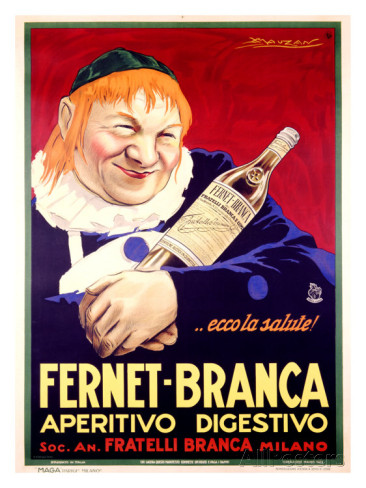
Image courtesy of AllPosters.com
I hope my friends at Boston's Weekly Dig won't begrudge my republishing a piece I did for them way back in April, 2007, an early cocktail feature I did on bitters. With Thanksgiving and the general roundelay of holiday overeating imminent, I thought now might be a good time to take another look at the wondrous world of herbal digestivi:

LEARNING TO TAKE THE BITTERS WITH THE SWEET
Drink like an adult: leave the booze Slurpies to the wide-eyed naïfs
by MC Slim JB
[originally published April 11, 2007 in Boston's Weekly Dig
]

I remember my first exposure to bitters, a freshman-year swig of a louche college pal’s Campari and soda. “That’s the single worst thing I’ve ever tasted,” I laughed, retreating to my watery lager. I’ve had some regrettable flirtations since: white Zinfandel, frozen Margaritas, that girl who drank Mudslides. But I’m more hard-boiled now. I’ve forsaken sweeter tipples for the bracing and the sharp -- drinks that not only perforate my social inhibitions but remedy my occasional foie gras overdose. I’ve learned how to take my medicine, the same bitters I once mocked.

Initially, I tiptoed down the bitters path with cough-syrupy Jägermeister, then known as the kind of chic German pick-me-up you might sip from your flask on the St. Moritz ski slopes, and a very effective digestif. Alas, some American marketing genius hyped it into a frat-boy’s guzzle, boosting case sales to the millions but ruining it for sophisticates.

Casting about for a replacement, I discovered Fernet-Branca, a potent Italian bitters that looks like Moxie and tastes like, well, poison. My first gulp was like an uppercut to the nose, its overwhelming medicinal bitterness leaving me stunned and scrunch-faced. But there was no denying Fernet’s restorative powers. One dose could magically rouse me from an overfed couch-bound stupor to dance-ready vitality in ten minutes. I grew to love its opaque otherness, to relish its assaultive flavor.

My own bar now features a dozen bitters, each a unique infusion of roots, herbs, spices, fruits, and other botanicals in a base of neutral spirits. Potable bitters like Campari and Meletti are intense but sippable by themselves, often poured freely into cocktails like Negronis and Americanos. Non-potable bitters like the ubiquitous Angostura and the obscurer Fee Brothers Orange are highly concentrated, administered in dashes to old-school cocktails like Sazeracs, Hoskinses, and Martinis.

Many countries produce bitters, but Italy is the motherlode, home to scores of potable amari, beloved as apertifs with soda or fruit juice, and as digestifs served neat. Scan the cordials shelf of your liquor store or Italian restaurant bar for Averna, Nonino, Ramazzotti, or Montenegro. They’re good bitters for beginners, a mellower breed of amaro with some sweetness to balance their astringency and herbal complexity.

Non-potable bitters have been bar staples since the 19th-century Golden Age of Cocktails, when the term “cocktail” implied their presence. Wherever cocktail craft is revered as an art form, they’re an indispensable pigment in the bartender’s paintbox. At No. 9 Park (9 Park St, Boston, 617.742.9991), John Gertsen’s scholarly mixologists are so steeped in cocktail lore they seem to have bitters in their bones. Their genteel Seelbach Cocktail ($14) spikes bourbon and Cointreau with seven dashes each of Angostura and Peychaud’s Bitters, finished with a big Champagne pour.

At Eastern Standard Kitchen & Drinks (528 Commonwealth Ave, Boston, 617.532.9100, easternstandardboston.com), Jackson Cannon’s elite crew wields potable bitters in some arresting cocktails. Straw-hued, sweet-spiced Becherovka from the Czech Republic meshes smoothly with honey syrup and fresh lemon juice as The Metamorphosis ($10), a refreshing original. Bitters are everywhere in their new “Lineage/Legacy” line of Golden Age-inspired cocktails, too, like The Little Italy ($10), in which artichoke-flavored Cynar adds an acerbic interrobang to a Manhattan-like blend of rye and sweet vermouth. Then there’s The Rat ($8), an affectionate homage to this location’s ghosts, a Fernet-Branca and Coke highball that’s as brash and insistent as the hardcore kids who once rocked the basement here.

In short, bitters are the punk rock of liquors: a rebuke to insipid conformity, a necessary corrective to self-indulgent excess, an echo of its forebears’ formative heyday. Before you order another Top-40 cocktail, credit your hard-won wisdom, embrace the bitterer things in life, and drink bitters. It’s at once a rebellious and grown-up thing to do.

02 November 2009

Yet Another "10 Worst Dining Trends" Blog Post

Top 10 lists are justifiably popular: they're simple, quick to read, and fun to argue about. In the food writing world, a recent Chicago Tribune article interviewed various culinary hotshots like celeb chef/owner David Chang of NYC's Momofuku to compile a list of “ten worst dining trends of the last decade”.

Predictably, this inspired of a lot of knock-offs and disputatious blog responses: I know I disagreed with a lot of it, like its broad-brush dismissal of molecular cooking. So I'm belatedly chiming in with my own not-especially-original list that includes a few tropes that regular readers of this blog will recognize as old hobbyhorses of mine. Here's my Boston-flavored 10 Worst Dining Trends of the Past Decade:
  • Egregious markups on ordinary wines, especially American ones. As I've documented at length elsewhere, certain restaurants in Boston get away with murder on this score, apparently because their clientele is too undereducated on wine pricing or entranced by atmosphere to realize they're being swindled.
  • Bashing of molecular cooking. It's easy to be dismissive of foams and other chem-lab approaches to cooking, at least as employed by chefs who use them as gimmicks to mask their lack of traditional cooking fundamentals. But to my ear, a lot of anti-molecular gastronomy rhetoric sounds like culinary anti-intellectualism, effectively “Haw, haw, that foo-foo food stuff is fer fags!” The truth is that molecular cooking as employed by masters like Grant Achatz or Wylie Dufresne can be a beautifully artistic (and delectable) application of food science. Still, innovation in the kitchen has always met with reactionary resistance: cooking raw animal flesh over fire was probably pshawed by some cavemen. In the less-distant past, once-edgy technologies like the food processor, stick blender and dehydrator were used only by professionals. In short, your mocking of molecular cooking today may look pretty stupid five or 10 years from now when you're buying a home sous-vide machine.
  • The rise of casual-dining chains, with their emphasis on portion size over quality, their dumbing down of regional and traditional cuisines (more on this below), and their crushing of more worthy, idiosyncratic, locally-owned independent restaurants.
  • The grotesque swelling of portion sizes, pioneered by the chains and often forced upon independents as a competitive response. I hate the consequent expectation now carried around by most diners that they will leave with enough leftovers to make three more meals.
  • The ongoing debasement of distinctive regional specialties and traditional cuisines (again with national chains as a major culprit). The ignominies of American Chinese food are an ancient example, but there are plenty of newer abominations against authenticity: par-boiled grilled meats char-grilled with a finishing sauce burnt on and called “barbecue”; breaded chicken wings referred to as “Buffalo wings”; chain-level Tex-Mex posited as Mexican cuisine; the suburbanization of Thai food; P.F. Chang's.
  • The proliferation of national luxury-steakhouse chains, a format that I find boring and mostly a ripoff. For example, Boston already has a half-dozen good locally-owned platinum-card beef palaces. No city of our size also needs a Smith & Wollensky, a Plaza III, a Fleming's, a Ruth's Chris, a Palm, two Morton's and three Capital Grilles.
  • The term "foodie". I think this label had some positive connotations once, but it has since been claimed by the kind of fools who think beating their friends to the latest overpriced It Place somehow makes them special, and dopes who watch 40 hours of Food Network programming a week but would never dare venture into Chinatown. Nobody I know who is really adventurous and single-minded about finding extraordinary food calls herself or himself a foodie anymore. (One might argue that the rise of the “foodiot” – a term coined by Joe Pompeo in a funny New York Observer piece for the kind of annoying food-obsessive who won't shut up at parties or on their blog about where and what they've been eating lately – is equally lamentable, but I'm not calling that particular kettle black.)
  • The Phantom Gourmet, for: a) fooling some naïve viewers into thinking the show provides unbiased restaurant reviews when it actually spends most of its time giving tug-jobs to its advertisers, b) spreading the notion among viewers sophisticated enough to recognize the Phantom's grifting that all restaurant reviewers might be whores, and c) those hairdos.
  • Food-centric reality TV, epitomized by the appalling crapfest that is Hell's Kitchen. The patently bogus, manufactured drama, as well as the casting of hosts like Gordon Ramsay and some chef contestants for their sheer obnoxiousness, are lowering the bar further for reality TV's already subterranean level of insults to viewer intelligence.
  • The death of restaurant dress codes. I understand it's difficult for restaurants to turn away any business in these brutal economic times, and that dress codes merely reflect our society: we customers are the ones wearing sweat pants, hoodies and flip-flops to church, the mall and the workplace. But I still think it's a damnable shame that our top-flight destination restaurants can't enforce some minimum level of decorum (as in, “Take off your baseball cap in the dining room at L'Espalier, asshole”) for the benefit of other patrons who are celebrating big-number anniversaries, birthdays or other special occasions. Too bad it's a fallen world.

14 October 2009

You don't really hate curry: reconsidering Indian and other South Asian cuisines

Dining out with friends who aren't particularly adventurous eaters can be a chore, but I understand what it's like to be afraid of unfamiliar foods. I was a timid eater through my teens, didn't really start expanding my culinary horizons until I first moved to a big city. So while I will try to cajole you into trying a bite from my plate of crispy-fried pigs' tails (an incredible dish at Cambridge's Craigie on Main), I won't press the point if you demur. But there's one statement that really galls me: “I don't like curry." Most frequently, I hear this from friends as their blanket excuse for never trying Indian food.

Saying "I hate curry" is like saying, "I don't like sauces", or “I don't like gravy". What many Americans don't understand is that curry is not a flavor, it's not a spice, and it certainly isn't that yellow powder in your spice rack.* It's a generic term: there are literally millions of recipes for curry. A sweet green curry from Central Thailand and a Kashmiri rogan josh are both curries, but have almost nothing in common except that they are richly-spiced gravies served with some kind of starch (rice, potatoes, bread, pancakes or noodles). The particular combination of spices and other ingredients in a specific type of Indian curry (of which there are thousands) varies almost literally by family, and there are over a billion souls there. And by the way, there's way more to Indian menus than curry dishes. But let's start with this one stubborn American misconception.

You simply must stop thinking of curry as something that comes from a McCormick's jar. This is exactly like thinking a can of Spaghetti-O's represents Italian food. That supermarket spice-aisle junk is a 19th-century British bastardization of one very specific style of Northern Indian curry, from a time when English cookery sucked really hard. It's likely a stale blend of turmeric, cumin, and fenugreek, with a lot of salt, MSG and anti-caking agents mixed in: no wonder you don't like it! Decent pre-made curry bases do exist -- jarred powders, canned pastes, shelf-stable bars that break into squares like baking chocolate -- but serious cooks put these in the same category as frozen food or jars of Prego: strictly for students, kitchen naifs, camping, the lazy, the time-pressed, and emergencies.

Pre-fab blends are scorned because the true flavors of spices fade quickly as essential oils evanesce after grinding. Any self-respecting cook from South Asia toasts and grinds their spices fresh daily. Some use a mortar and pestle, but there's also a specialty appliance, the Sumeet grinder, a wet/dry electric blender optimized for grinding spices, aromatics, and other ingredients into pastes. Real local chefs with curries on their menus aren't reaching for a jar. So if you've turned your nose up at Indian food because your mom once sprinkled Durkee's curry powder on your chicken wings or tuna salad and you didn't like it, it's time for a reconsideration.

And another thing: Indian food is no more a single cuisine than American food: like the US, it's a big country with a diverse collection of many regional cuisines. Indian restaurants have come a long way in Boston; unlike 20 years ago, you won't find the same dozen Punjabi and Mughal dishes everywhere you go today. It's now possible for Bostonians to enjoy regional cooking from all over South Asia. Partly this is because American diners have gotten more sophisticated; partly it's because high technology, healthcare and other industries have brought professionals from all over the sub-continent to New England, and these ex-pats are driving demand for greater regional diversity.

Here are a few South Asian restaurants in Greater Boston that I enjoy, identified by one feature I especially value:
  • Take-out: Guru the Caterer (though it has expanded recently and now has sit-down space)
  • Desi Chinese (Chinese food as prepared in India, a unique and wonderful creature): Namaskar, Indian Dhaba
  • Balti (a creation of Pakistani ex-pats in Birmingham, England): Bhindi Bazaar
  • Borrowing of Indian technique in the service of a Western restaurant: tandoor at Scampo
  • High-end, fusion-y small plates: naan bar menu at Mantra
I find it helps to start exploring with a friend who knows a little about the cuisine. But it's worth noting that chicken tikka masala is now the most popular restaurant dish in the UK. This "Indian for beginners" dish appears on a lot of local menus: chicken roasted in a clay oven and served in a mild, creamy tomato sauce. It's perhaps a bastardized example of the cuisine, purportedly invented by an ex-pat chef in Birmingham or Glasgow, but you have to start somewhere, and authenticity aside, a well-done chicken tikka masala is really delicious. So shake off your Western ignorance about what a curry is all about, and give Indian cuisine a shot. There's a whole new world waiting for you there.

* Yes, I am aware of the curry leaf, a/k/a sweet neem, a tree leaf commonly used in South Indian, Sri Lankan and Pakistani cooking, but if you know about that, you probably don't need to be reading this particular essay.

18 September 2009

Check out "Teach a Chef to Fish" on Sept 28, 2009

I haven't been particularly active on sustainability issues (though I'm learning), but I can plug worthy events on the subject by other folks who are, like this upcoming roundtable on seafood sustainability aimed at professional chefs:

Teach a Chef to Fish: A Roundtable on Seafood Sustainability for Industry Professionals
Monday, September 28, 2009, 3pm to 5pm
Fairmont Battery Wharf Hotel, 3 Battery Wharf, Boston, MA
Cost: $50 (50% of proceeds to benefit the New England Aquarium)

Fact: Almost 90% of diners say they want restaurants to serve only sustainable seafood, but nearly 75% are unaware which fish are close to extinction.

The Teach a Chef to Fish roundtable will be a "roll up your sleeves and learn" session. Attendees will hear from a panel, get introduced to a new state-of-the-art sourcing service, and learn how to redo seafood recipes to include on their own menus just in time for October's National Seafood Month.

Event highlights:
  • The Fairmont Hotel will open with their story of how the resort chain began to integrate sustainability into their practices 20 years ago, and how the Battery Wharf property in Boston decided to remove bluefin tuna and Chilean sea bass from their menus.
  • Attendees will hear about sustainable aquaculture from the example of Australis Barramundi, "The Better Fish". Not all aquaculture is problematic. Attendees will learn why and how this fish is an example of a sustainable aquaculture.
  • The New England Aquarium will share insights from its sustainable sourcing initiatives and give examples of what innovative companies are doing to help busy culinary professionals adopt sustainable seafood sourcing practices.
  • Attendees will learn about new tools like "Green Chefs, Blue Ocean", a joint venture between the Blue Ocean Institute and the Chefs Collaborative; review their seven-part online tutorial; and walk through their new sourcing service, FishChoice. Now in live field testing, FishChoice aims to give culinary professionals real-time information about sourcing sustainable seafood from a large database of purveyors, many of them already-familiar names. Chefs will have the rare opportunity to shape the service by offering feedback.
  • Attendees will gain insights into workable solutions for offering the sustainable seafood that diners prefer. Participants will then work together using the new tools to apply their creativity to redo existing recipes, working through actual menu items to take the first steps toward more sustainable menus.
Presenters include chefs from top restaurants in Boston, MA and RI. Attendees will receive sponsors discounts and materials in a USB flash drive to take away.

Register here via PayPal

Please contact the event organizer with any questions:

Jacqueline Church
617.851.4880
http://JacquelineChurch.com
http://GourmetFood.suite101.com
On Twitter: http://twitter.com/LDGourmet
Teach a Man to Fish!
http://jacquelinechurch.com/pig-tales-a-fish-friends/1806-what-is-teach-a-man-to-fish-

13 September 2009

"Feeding Celine": my guest post in The Leather District Gourmet blog

I just contributed a guest post to my friend Jacqueline Church's very fine Boston food/drink blog The Leather District Gourmet. It's called Feeding Celine -- Eating Well on an Engineer's Student's Budget, and it's basically more advice to incoming college students on dining out in Boston, much like my recent blog essay Wear Sunscreen in the Restaurant, or, Words of Advice for Hungry Young People.

Feeding Celine adds specific recommendations on cheap-eats dishes and venues within a short distance (a few T stops) of M.I.T., where a young friend just matriculated.

Be sure to check out Church's other blogs, notably Pig Tales & Fish Friends, on sustainability issues.

02 September 2009

Wear Sunscreen in the Restaurant, or, Words of Advice for Hungry Young People

Allston Christmas
Photo courtesy of The Boston Herald
Here are a few dining-out tips for you kids who've just arrived in the Hub of the Universe to start school, from a longtime chaser of the high life who's lived in Boston forever -- like, since before PlayStation II, when the Internets were all 110 baud (don’t Google that now, pay attention):
  • Get the hell out. Boston is no New York City, but it’s still a pretty great restaurant town, in part because you students support some excellent cheap-to-moderate places. But you'll still have to duck the many miserable ones aimed at the sorry philistines among you. If you have the iota of adventurousness necessary to rise above a life of mediocre food, you'll have to occasionally get on your bike or the subway or the bus to visit places like Chinatown, East Boston, Roxbury, Dorchester, Jamaica Plain, East Cambridge, East Somerville, and Allston. If you get off your ass, you can eat fantastic food for your entire four or five or twelve years here. Don’t blow this opportunity by settling for so-so burgers, pizza, and burritos. Example: check out the Super 88 Market at the corner of Commonwealth Ave and Brighton Ave in Allston. Its ten-stall food court offers phenomenal cheap eats from China, Taiwan, Korea, Japan, Vietnam, Thailand, and India. It’s a low-risk, incredibly tasty way to start exploring. 
  • Don’t overlook old media. While you still can, take advantage of professional restaurant reviews in publications like the Boston Globe, Boston Magazine, and The Improper Bostonian, where I currently serve as professional restaurant critic and food/drinks feature writer. 
  • Check out local bloggers and social media. In addition to the MC Slim JB blog, Boston has many useful food and drink blogs -- start with my WORTHY BLOGS / LINKS section on the lower left -- and unlike this one, most have attractive photos, video clips, and illustrations. Hundreds of Boston restaurants, bars, food retailers, and the writers who cover them are now on Twitter and Facebook: you'll quickly figure out which ones are worth following/friending and which are annoying, one-note self-promoters. Two helpful primers on my blog include an intro to Boston's craft cocktail scene and a humorous look at the Phantom Gourmet, a cheesy local TV show that reviews Boston restaurants (sort of).
  • Try to observe some of our quaint, Colonial-era dining customs. Take off your baseball cap in the dining room, don’t spend the entire meal blabbing or texting on your phone, limit your public drunkenness to the pre-projectile-vomiting stage, learn how to tip properly, curb the public displays of affection, and consider that other patrons might not find your bare armpits, navel, or toes an appetizing sight, especially at swankier venues. I won’t tell you to sit up straight, but you really should do that, too.
So welcome to Boston, kids: it’s a wonderful place to eat, and we’re really glad to have you here. Now get off my lawn.

06 August 2009

“But There Is No Mr. L’Espalier!”, or, The Bane of the Grammar-Stickler Restaurant Critic

I believe most people are like me in that they harbor secret pet peeves, petty grudges against their fellow human beings that they hide because airing them would reveal them as cranks, obsessives, nutballs. “Really? That tiny issue bothers you? Who the heck cares about that? Who the hell even thinks about that?!” Luckily, I have a blog, and blogs were practically made for confessing these kinds of niggling idiosyncrasies. My private hell is being a grammar stickler, the kind that Lynne Truss describes in her slim, hilarious volume “Eats, Shoots, and Leaves”. Further, as a restaurant critic, I chafe at a very particular sub-order of grammatical irritant: the way people turn restaurant names into possessives.

It has bugged me since I was a kid: why do people have to append an apostrophe/letter-S to every restaurant name? Legal Sea Foods becomes Legal’s. Sonsie becomes Sonsie’s. It’s like people can’t wrap their minds around the notion that not every restaurant is named after an owner. The doofus logic seems to be, “This dude Sal owns a pizza place and calls it Sal’s Pizza, ergo it's L’Espalier’s, as in Mr. L'Espalier's Place.” Hearing this makes my blood boil. I know for a fact that it is L'Espalier, not L'Espalier's.

Brooking this solecism is a daily trial. Consider these renditions of popular Boston restaurant names as frequently spoken aloud by locals: Mistral’s, Beehive’s, Neptune’s, Silvertone’s, Pigalle’s, Aquitaine’s, La Voile’s, Douzo’s, EVOO’s, Hungry Mother’s, O Ya’s, Vlora’s. Yet if you go to the restaurant and look at the sign, you'll find no apostrophe+s in its name. To me, that errantly tacked-on possessive is as stupid and grating as a promo for The Real Housewives of New Jersey, only I can’t just turn it off. Everybody, but everybody, does it.

Does this common habit make you wince, clench your teeth, growl inwardly? If not, you are a normal person: move along. But if you’re a budding restaurateur who shares my absurd affliction, I believe I can help. Free of any consulting fees, I offer the following guide to selecting a restaurant name that won’t get you a damnable apostrophe+s wrongly bolted on, with real-life examples and counter-examples:
  • Don’t pick anything that can easily be mistaken for a girl’s name. It’s not Clio’s, Sorellina’s, Regina’s, Carmen’s, Stella’s, Laurel’s, or Mamma Maria’s, but people love saying them that way – apparently they just feel better thinking some lady owns the place. Masculine names aren’t much better: people still refer to Dali’s and Da Vinci’s, even if they suspect that the famous dead guy doesn’t really own a piece of the joint.
  • Avoid words that end in a vowel, especially Italian and Spanish ones; they’re too easy to pronounce with the bogus possessive attached. That way you won’t be seething like the owners who have to endure malapropisms like Cuchi Cuchi’s, Vee Vee's, Scampo’s, Rocca’s, Grezzo’s, Sportello’s, Erbaluce’s, Grotto’s, Picco’s, Pomodoro’s, Via Matta’s, Toro’s, Rialto’s, and Chacarero’s.
  • Try tongue-twisters: choose a word ending in “s” (ideally non-plural: see below) or a difficult consonant cluster. Who can be bothered with the lip-work necessary to pronounce Radius’s, Meritage’s, Tossed’s, Rendezvous’s, or Les Zygomates’s? No one.
  • Use physical locations: no sane person would think that Green Street might be the owner of a restaurant and so call that restaurant Green Street’s. Try rooms with “The” in front (The Oak Room, The Wine Cellar, The Blue Room), buildings (Church, Banq, House of Tibet, Peach Farm, Roadhouse), or addresses (Tory Row, No. 9 Park, Scollay Square, Kingston Station, Deep Ellum). No one comfortably says, “I just adore that place, The Butcher Shop’s.”
  • Consider vague nouns, the more abstract the better, like District, Equator, Clink, Sage, Blue Ginger, Coda, Drink, Elephant Walk, Gaslight, Greek Corner, and Summer Winter. You won’t hear, “Let’s go to India Quality’s!”
  • Befriend non-Latinate foreign words like Uni, Dok Bua, Kaze, Lala Rokh, Mela, Oishii, Tashi Delek, and Teranga. Those could be names, but most Anglophone Americans will feel uncertain about them, and thus be less likely to slap on the possessive.
  • Use numbers to repel the apostrophe+s, like Bin 26, Cambridge, 1., and Grill 23.
  • Even if you're comfortable with possessives, think carefully before you include an apostrophe. Is there really a Mr. Soya at Soya’s? Does a Ms. Zebra sit on the board of Zebra’s Bistro? I’d love to believe there’s a Pepper Sky running Pepper Sky’s Thai Sensation – she sounds like the star of a 1960s TV show about a secret agent who favors Mod fashions – but I suspect the truth is duller.
  • To discourage unwanted written possessives, employ weird spellings, shouty ALL-CAPS, mixed case, all lowercase, and/or gimmicky punctuation, like Jer-Ne, OM, LiNEaGe, dbar, Mooo…, ZuZu!, and STIX. These already look bizarre enough; maybe folks will resist putting the extra crap on the end.
  • Watch out for plural nouns; idiots may pronounce them properly, but in writing will jam in unwanted apostrophes. Just ask the poor souls at Pops (the chef/owner’s nickname), Josephs Two (run by two guys named Joseph, like Wise Men Three), Salts, Olives, Ten Tables, Anchovies, and Gargoyles on the Square. (Honestly, there’s no Uncle Gargoyle, so why would you write it as Gargoyle's?)
Phew, that made me feel better. Next, I must attempt to cleanse the English-speaking world of the Superfluous Pop-Culture “The”. You know, as in: the names of those movies are “Big Night” and “Alien”, not “The Big Night” and “The Alien”. Also, the name of that band is Talking Heads, not The Talking Heads. (That must have chapped their hides, too, as they used an album title to point this out.) Then I have to get Bostonians to stop referring to our central parks as the Boston Commons and Public Gardens: it's Boston Common and the Public Garden, you know. What do you mean, you don’t care?!

10 July 2009

An encomium for Icarus: a watershed fine-dining experience

“Nostalgia: it's delicate, but potent… in Greek, ‘nostalgia’ literally means ‘the pain from an old wound.’ It's a twinge in your heart far more powerful than memory alone.” -- Don Draper, “Mad Men” Season 1, Episode 13: “The Wheel”

I had a last meal at Icarus the other night, just before it closed for good after 31 years of operation in three different locations in Boston’s South End. When you spend as much time dining out as I do, you get used to a certain ebb and flow, a sense of the inevitability that most restaurants, even the great ones, don’t last more than a few years. You’re sad when favorites go, but you know it’s the nature of the business. But I felt a sharper-than-usual stab of nostalgia at this particular last meal, as Icarus was a restaurant that changed my life.

Everyone has life-altering moments: the inspirational lecture from a beloved college professor, the high school sports failure that quashes your Hall-of-Fame fantasies, the instant you realize you’ve found someone you could spend your life with. For me, one of those moments was my first dinner at Icarus, many years ago. My culinary experience to that point was meager: my mom’s cooking had made me like a cat, salivating at the sound of the electric can opener. Dinners in the homes of childhood friends with Azorean immigrant parents, communal meals prepared by better-traveled fraternity siblings, urban street food, and cheap Italian, Greek, and Puerto Rican joints: these circumscribed the narrow range of my food world.

That first meal at Icarus really bowled me over, upending everything I knew about fine dining. It wasn’t a posh chophouse or a kitschy upscale Italian-American joint. It sat in the South End, a neighborhood that had hip bona-fides as Boston’s gay ghetto but was still scarily crime-ridden, where the unwary were routinely robbed. Somehow I’d heard that this Icarus was terrific in a new kind of way, so I brought a date I wanted to impress with my sophistication and boldness. We’d risk getting mugged for a great meal together.

I don’t remember the girl, or what I ordered beyond the appetizer including some foie gras (itself shocking to see outside of a luxury French place), but the room certainly impressed me: Old Hollywood, Art Deco glamour. The crowd was young and urbane, gayer than I was used to. Service was attentive but markedly unstuffy. The menu took pains to describe the composition of each dish and the provenance of its ingredients. Here, new to me, was New American cuisine, with its emphasis on fresh local ingredients and globetrotting eclecticism, proffering a new kind of connoisseurship. The chef obviously loved introducing diners to novel ingredients in fresh preparations; he wasn’t showy about his classical French cooking skills, but he could bring them when needed.

That meal put the hook in me the way no swank dinner had ever done. It snapped off and discarded my simple notions of what fine dining should be about. Everything about it excited me. I peppered my server with questions: What’s that ingredient? What does this word mean? How is that prepared again? At the same time, it was relaxed, unpretentious: it expected its customers to take outlandish influences and components in stride. It was a peek into a broader, wilder world of possibilities, and it changed me. I utterly lost interest in Boston’s elite restaurants of the day – the creaky temples to haute cuisine, the sclerotic Continental places, the ostentatiously dull steak and seafood palaces, the suffocating old-boys' dining clubs. I suddenly found myself obsessed with finding restaurants as fresh, entertaining and challenging as Icarus, devoting a huge chunk of my disposable income to their pursuit. In an instant, dining out became my primary hobby.

We've come so far from Icarus’s early heyday that it’s easy to forget how radical it once was. Consider an Icarus appetizer from way back, grilled shrimp with mango/jalapeño sorbet. That would hardly raise an eyebrow today, but every atom of that dish was strange at the time: grilling (not boiling or steaming) shrimp. Sorbet – sorbet?! – of tropical fruit and burning-hot chili on your entrée: it was bizarre, fantastic, crazy! Having summoned your courage, ordered it, and taken your first bite, you were dazzled by its contradictions. East/West! Hot/cold! Sweet/fiery/salty/sour! It kicked old notions of classic European cuisine and heartland American convention in the crotch. It was sassy, it was beautiful, it was sublime. Eating it made you feel brave and cool, like being let in on some outré, slightly dangerous secret.

Times have changed mightily. Our supermarkets now stock an astonishing array of produce, meats, artisanal cheeses, and other groceries from around the world. Americans prepare Peruvian and Vietnamese and Indian food at home. The Food Network fills 24 hours a day with gourmet dining and cooking programming, making national celebrities of local chefs. A plebeian take on the creativity that Icarus and others spearheaded now shows up in casual-dining chains: you can order wasabi-crusted rare ahi with miso beurre blanc at The Cheesecake Factory, and macadamia-crusted tilapia with coconut shrimp and mango puree at the Rainforest Cafe.

In the wake of this evolution, Icarus’s menu no longer wowed -- by 2009, it had come to look sort of tame. Chasers of avant-garde novelty had long since moved on to edgier places like Clio and O Ya. The South End had become a thoroughly gentrified, mostly wealthy neighborhood with dozens of fine-dining restaurants. And Chris Douglass, originally Icarus’s chef, later its chef/owner, had decided that running an upscale restaurant was no longer the fun it once was, especially in a dire economy. Selling Icarus allowed him to focus on his newer, downmarket Ashmont Grill and Tavolo restaurants in the Dorchester neighborhood where he lives. But before Icarus fades from the local dining consciousness, I want to remind Bostonians how thrilling, how pioneering it once was. It helped catalyze an enduring interest in creative cuisine that has enormously enriched my leisure hours since.

I made that last reservation hoping to hear an echo of that first dinner, the genesis of the fixation that ultimately led to my current jobs reviewing restaurants for publications like the Boston Phoenix and Stuff Magazine. I got a little misty as I savored a last Negroni at that cozy bar, luxuriating one final time against that romantic backdrop of Deco luster and live jazz, a trio led by a melancholy baritone sax. Moving to the dining room, I noted many similarly verklempt patrons, mostly older couples, getting in their last licks. I ordered a few favorites: polenta with braised exotic mushrooms and fresh thyme, followed by crisp-grilled local bluefish with smoked mussels and tomato salsa, then a perfect lemon panna cotta with blueberry compote.

As ever, these were meticulously plated, skillfully served, fully delicious. I ate in wistful silence, slowing as the meal went on, reluctant for it to end. Finally, I paid the check, took a last stroll around to admire the gorgeous old art and lamps and statuary, then walked up the stairs and out the door, murmuring my appreciation to Douglass and the staffers who'd given me so much joy over the years. This place, I thought, really left a mark on me. So long, Icarus, and thanks for diverting me down that curious, delectable path, for which I will always be grateful, and always remember you.