25 November 2009

From the Archives: Learning to Take the Bitters with the Sweet

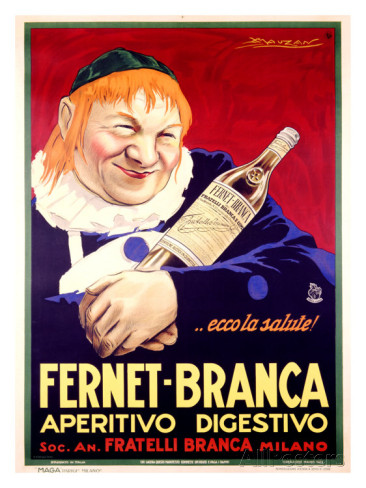
Image courtesy of AllPosters.com
I hope my friends at Boston's Weekly Dig won't begrudge my republishing a piece I did for them way back in April, 2007, an early cocktail feature I did on bitters. With Thanksgiving and the general roundelay of holiday overeating imminent, I thought now might be a good time to take another look at the wondrous world of herbal digestivi:

LEARNING TO TAKE THE BITTERS WITH THE SWEET
Drink like an adult: leave the booze Slurpies to the wide-eyed naïfs
by MC Slim JB
[originally published April 11, 2007 in Boston's Weekly Dig
]

I remember my first exposure to bitters, a freshman-year swig of a louche college pal’s Campari and soda. “That’s the single worst thing I’ve ever tasted,” I laughed, retreating to my watery lager. I’ve had some regrettable flirtations since: white Zinfandel, frozen Margaritas, that girl who drank Mudslides. But I’m more hard-boiled now. I’ve forsaken sweeter tipples for the bracing and the sharp -- drinks that not only perforate my social inhibitions but remedy my occasional foie gras overdose. I’ve learned how to take my medicine, the same bitters I once mocked.

Initially, I tiptoed down the bitters path with cough-syrupy Jägermeister, then known as the kind of chic German pick-me-up you might sip from your flask on the St. Moritz ski slopes, and a very effective digestif. Alas, some American marketing genius hyped it into a frat-boy’s guzzle, boosting case sales to the millions but ruining it for sophisticates.

Casting about for a replacement, I discovered Fernet-Branca, a potent Italian bitters that looks like Moxie and tastes like, well, poison. My first gulp was like an uppercut to the nose, its overwhelming medicinal bitterness leaving me stunned and scrunch-faced. But there was no denying Fernet’s restorative powers. One dose could magically rouse me from an overfed couch-bound stupor to dance-ready vitality in ten minutes. I grew to love its opaque otherness, to relish its assaultive flavor.

My own bar now features a dozen bitters, each a unique infusion of roots, herbs, spices, fruits, and other botanicals in a base of neutral spirits. Potable bitters like Campari and Meletti are intense but sippable by themselves, often poured freely into cocktails like Negronis and Americanos. Non-potable bitters like the ubiquitous Angostura and the obscurer Fee Brothers Orange are highly concentrated, administered in dashes to old-school cocktails like Sazeracs, Hoskinses, and Martinis.

Many countries produce bitters, but Italy is the motherlode, home to scores of potable amari, beloved as apertifs with soda or fruit juice, and as digestifs served neat. Scan the cordials shelf of your liquor store or Italian restaurant bar for Averna, Nonino, Ramazzotti, or Montenegro. They’re good bitters for beginners, a mellower breed of amaro with some sweetness to balance their astringency and herbal complexity.

Non-potable bitters have been bar staples since the 19th-century Golden Age of Cocktails, when the term “cocktail” implied their presence. Wherever cocktail craft is revered as an art form, they’re an indispensable pigment in the bartender’s paintbox. At No. 9 Park (9 Park St, Boston, 617.742.9991), John Gertsen’s scholarly mixologists are so steeped in cocktail lore they seem to have bitters in their bones. Their genteel Seelbach Cocktail ($14) spikes bourbon and Cointreau with seven dashes each of Angostura and Peychaud’s Bitters, finished with a big Champagne pour.

At Eastern Standard Kitchen & Drinks (528 Commonwealth Ave, Boston, 617.532.9100, easternstandardboston.com), Jackson Cannon’s elite crew wields potable bitters in some arresting cocktails. Straw-hued, sweet-spiced Becherovka from the Czech Republic meshes smoothly with honey syrup and fresh lemon juice as The Metamorphosis ($10), a refreshing original. Bitters are everywhere in their new “Lineage/Legacy” line of Golden Age-inspired cocktails, too, like The Little Italy ($10), in which artichoke-flavored Cynar adds an acerbic interrobang to a Manhattan-like blend of rye and sweet vermouth. Then there’s The Rat ($8), an affectionate homage to this location’s ghosts, a Fernet-Branca and Coke highball that’s as brash and insistent as the hardcore kids who once rocked the basement here.

In short, bitters are the punk rock of liquors: a rebuke to insipid conformity, a necessary corrective to self-indulgent excess, an echo of its forebears’ formative heyday. Before you order another Top-40 cocktail, credit your hard-won wisdom, embrace the bitterer things in life, and drink bitters. It’s at once a rebellious and grown-up thing to do.

02 November 2009

Yet Another "10 Worst Dining Trends" Blog Post

Top 10 lists are justifiably popular: they're simple, quick to read, and fun to argue about. In the food writing world, a recent Chicago Tribune article interviewed various culinary hotshots like celeb chef/owner David Chang of NYC's Momofuku to compile a list of “ten worst dining trends of the last decade”.

Predictably, this inspired of a lot of knock-offs and disputatious blog responses: I know I disagreed with a lot of it, like its broad-brush dismissal of molecular cooking. So I'm belatedly chiming in with my own not-especially-original list that includes a few tropes that regular readers of this blog will recognize as old hobbyhorses of mine. Here's my Boston-flavored 10 Worst Dining Trends of the Past Decade:
  • Egregious markups on ordinary wines, especially American ones. As I've documented at length elsewhere, certain restaurants in Boston get away with murder on this score, apparently because their clientele is too undereducated on wine pricing or entranced by atmosphere to realize they're being swindled.
  • Bashing of molecular cooking. It's easy to be dismissive of foams and other chem-lab approaches to cooking, at least as employed by chefs who use them as gimmicks to mask their lack of traditional cooking fundamentals. But to my ear, a lot of anti-molecular gastronomy rhetoric sounds like culinary anti-intellectualism, effectively “Haw, haw, that foo-foo food stuff is fer fags!” The truth is that molecular cooking as employed by masters like Grant Achatz or Wylie Dufresne can be a beautifully artistic (and delectable) application of food science. Still, innovation in the kitchen has always met with reactionary resistance: cooking raw animal flesh over fire was probably pshawed by some cavemen. In the less-distant past, once-edgy technologies like the food processor, stick blender and dehydrator were used only by professionals. In short, your mocking of molecular cooking today may look pretty stupid five or 10 years from now when you're buying a home sous-vide machine.
  • The rise of casual-dining chains, with their emphasis on portion size over quality, their dumbing down of regional and traditional cuisines (more on this below), and their crushing of more worthy, idiosyncratic, locally-owned independent restaurants.
  • The grotesque swelling of portion sizes, pioneered by the chains and often forced upon independents as a competitive response. I hate the consequent expectation now carried around by most diners that they will leave with enough leftovers to make three more meals.
  • The ongoing debasement of distinctive regional specialties and traditional cuisines (again with national chains as a major culprit). The ignominies of American Chinese food are an ancient example, but there are plenty of newer abominations against authenticity: par-boiled grilled meats char-grilled with a finishing sauce burnt on and called “barbecue”; breaded chicken wings referred to as “Buffalo wings”; chain-level Tex-Mex posited as Mexican cuisine; the suburbanization of Thai food; P.F. Chang's.
  • The proliferation of national luxury-steakhouse chains, a format that I find boring and mostly a ripoff. For example, Boston already has a half-dozen good locally-owned platinum-card beef palaces. No city of our size also needs a Smith & Wollensky, a Plaza III, a Fleming's, a Ruth's Chris, a Palm, two Morton's and three Capital Grilles.
  • The term "foodie". I think this label had some positive connotations once, but it has since been claimed by the kind of fools who think beating their friends to the latest overpriced It Place somehow makes them special, and dopes who watch 40 hours of Food Network programming a week but would never dare venture into Chinatown. Nobody I know who is really adventurous and single-minded about finding extraordinary food calls herself or himself a foodie anymore. (One might argue that the rise of the “foodiot” – a term coined by Joe Pompeo in a funny New York Observer piece for the kind of annoying food-obsessive who won't shut up at parties or on their blog about where and what they've been eating lately – is equally lamentable, but I'm not calling that particular kettle black.)
  • The Phantom Gourmet, for: a) fooling some naïve viewers into thinking the show provides unbiased restaurant reviews when it actually spends most of its time giving tug-jobs to its advertisers, b) spreading the notion among viewers sophisticated enough to recognize the Phantom's grifting that all restaurant reviewers might be whores, and c) those hairdos.
  • Food-centric reality TV, epitomized by the appalling crapfest that is Hell's Kitchen. The patently bogus, manufactured drama, as well as the casting of hosts like Gordon Ramsay and some chef contestants for their sheer obnoxiousness, are lowering the bar further for reality TV's already subterranean level of insults to viewer intelligence.
  • The death of restaurant dress codes. I understand it's difficult for restaurants to turn away any business in these brutal economic times, and that dress codes merely reflect our society: we customers are the ones wearing sweat pants, hoodies and flip-flops to church, the mall and the workplace. But I still think it's a damnable shame that our top-flight destination restaurants can't enforce some minimum level of decorum (as in, “Take off your baseball cap in the dining room at L'Espalier, asshole”) for the benefit of other patrons who are celebrating big-number anniversaries, birthdays or other special occasions. Too bad it's a fallen world.

14 October 2009

You don't really hate curry: reconsidering Indian and other South Asian cuisines

Dining out with friends who aren't particularly adventurous eaters can be a chore, but I understand what it's like to be afraid of unfamiliar foods. I was a timid eater through my teens, didn't really start expanding my culinary horizons until I first moved to a big city. So while I will try to cajole you into trying a bite from my plate of crispy-fried pigs' tails (an incredible dish at Cambridge's Craigie on Main), I won't press the point if you demur. But there's one statement that really galls me: “I don't like curry." Most frequently, I hear this from friends as their blanket excuse for never trying Indian food.

Saying "I hate curry" is like saying, "I don't like sauces", or “I don't like gravy". What many Americans don't understand is that curry is not a flavor, it's not a spice, and it certainly isn't that yellow powder in your spice rack.* It's a generic term: there are literally millions of recipes for curry. A sweet green curry from Central Thailand and a Kashmiri rogan josh are both curries, but have almost nothing in common except that they are richly-spiced gravies served with some kind of starch (rice, potatoes, bread, pancakes or noodles). The particular combination of spices and other ingredients in a specific type of Indian curry (of which there are thousands) varies almost literally by family, and there are over a billion souls there. And by the way, there's way more to Indian menus than curry dishes. But let's start with this one stubborn American misconception.

You simply must stop thinking of curry as something that comes from a McCormick's jar. This is exactly like thinking a can of Spaghetti-O's represents Italian food. That supermarket spice-aisle junk is a 19th-century British bastardization of one very specific style of Northern Indian curry, from a time when English cookery sucked really hard. It's likely a stale blend of turmeric, cumin, and fenugreek, with a lot of salt, MSG and anti-caking agents mixed in: no wonder you don't like it! Decent pre-made curry bases do exist -- jarred powders, canned pastes, shelf-stable bars that break into squares like baking chocolate -- but serious cooks put these in the same category as frozen food or jars of Prego: strictly for students, kitchen naifs, camping, the lazy, the time-pressed, and emergencies.

Pre-fab blends are scorned because the true flavors of spices fade quickly as essential oils evanesce after grinding. Any self-respecting cook from South Asia toasts and grinds their spices fresh daily. Some use a mortar and pestle, but there's also a specialty appliance, the Sumeet grinder, a wet/dry electric blender optimized for grinding spices, aromatics, and other ingredients into pastes. Real local chefs with curries on their menus aren't reaching for a jar. So if you've turned your nose up at Indian food because your mom once sprinkled Durkee's curry powder on your chicken wings or tuna salad and you didn't like it, it's time for a reconsideration.

And another thing: Indian food is no more a single cuisine than American food: like the US, it's a big country with a diverse collection of many regional cuisines. Indian restaurants have come a long way in Boston; unlike 20 years ago, you won't find the same dozen Punjabi and Mughal dishes everywhere you go today. It's now possible for Bostonians to enjoy regional cooking from all over South Asia. Partly this is because American diners have gotten more sophisticated; partly it's because high technology, healthcare and other industries have brought professionals from all over the sub-continent to New England, and these ex-pats are driving demand for greater regional diversity.

Here are a few South Asian restaurants in Greater Boston that I enjoy, identified by one feature I especially value:
  • Take-out: Guru the Caterer (though it has expanded recently and now has sit-down space)
  • Desi Chinese (Chinese food as prepared in India, a unique and wonderful creature): Namaskar, Indian Dhaba
  • Balti (a creation of Pakistani ex-pats in Birmingham, England): Bhindi Bazaar
  • Borrowing of Indian technique in the service of a Western restaurant: tandoor at Scampo
  • High-end, fusion-y small plates: naan bar menu at Mantra
I find it helps to start exploring with a friend who knows a little about the cuisine. But it's worth noting that chicken tikka masala is now the most popular restaurant dish in the UK. This "Indian for beginners" dish appears on a lot of local menus: chicken roasted in a clay oven and served in a mild, creamy tomato sauce. It's perhaps a bastardized example of the cuisine, purportedly invented by an ex-pat chef in Birmingham or Glasgow, but you have to start somewhere, and authenticity aside, a well-done chicken tikka masala is really delicious. So shake off your Western ignorance about what a curry is all about, and give Indian cuisine a shot. There's a whole new world waiting for you there.

* Yes, I am aware of the curry leaf, a/k/a sweet neem, a tree leaf commonly used in South Indian, Sri Lankan and Pakistani cooking, but if you know about that, you probably don't need to be reading this particular essay.

18 September 2009

Check out "Teach a Chef to Fish" on Sept 28, 2009

I haven't been particularly active on sustainability issues (though I'm learning), but I can plug worthy events on the subject by other folks who are, like this upcoming roundtable on seafood sustainability aimed at professional chefs:

Teach a Chef to Fish: A Roundtable on Seafood Sustainability for Industry Professionals
Monday, September 28, 2009, 3pm to 5pm
Fairmont Battery Wharf Hotel, 3 Battery Wharf, Boston, MA
Cost: $50 (50% of proceeds to benefit the New England Aquarium)

Fact: Almost 90% of diners say they want restaurants to serve only sustainable seafood, but nearly 75% are unaware which fish are close to extinction.

The Teach a Chef to Fish roundtable will be a "roll up your sleeves and learn" session. Attendees will hear from a panel, get introduced to a new state-of-the-art sourcing service, and learn how to redo seafood recipes to include on their own menus just in time for October's National Seafood Month.

Event highlights:
  • The Fairmont Hotel will open with their story of how the resort chain began to integrate sustainability into their practices 20 years ago, and how the Battery Wharf property in Boston decided to remove bluefin tuna and Chilean sea bass from their menus.
  • Attendees will hear about sustainable aquaculture from the example of Australis Barramundi, "The Better Fish". Not all aquaculture is problematic. Attendees will learn why and how this fish is an example of a sustainable aquaculture.
  • The New England Aquarium will share insights from its sustainable sourcing initiatives and give examples of what innovative companies are doing to help busy culinary professionals adopt sustainable seafood sourcing practices.
  • Attendees will learn about new tools like "Green Chefs, Blue Ocean", a joint venture between the Blue Ocean Institute and the Chefs Collaborative; review their seven-part online tutorial; and walk through their new sourcing service, FishChoice. Now in live field testing, FishChoice aims to give culinary professionals real-time information about sourcing sustainable seafood from a large database of purveyors, many of them already-familiar names. Chefs will have the rare opportunity to shape the service by offering feedback.
  • Attendees will gain insights into workable solutions for offering the sustainable seafood that diners prefer. Participants will then work together using the new tools to apply their creativity to redo existing recipes, working through actual menu items to take the first steps toward more sustainable menus.
Presenters include chefs from top restaurants in Boston, MA and RI. Attendees will receive sponsors discounts and materials in a USB flash drive to take away.

Register here via PayPal

Please contact the event organizer with any questions:

Jacqueline Church
617.851.4880
http://JacquelineChurch.com
http://GourmetFood.suite101.com
On Twitter: http://twitter.com/LDGourmet
Teach a Man to Fish!
http://jacquelinechurch.com/pig-tales-a-fish-friends/1806-what-is-teach-a-man-to-fish-

13 September 2009

"Feeding Celine": my guest post in The Leather District Gourmet blog

I just contributed a guest post to my friend Jacqueline Church's very fine Boston food/drink blog The Leather District Gourmet. It's called Feeding Celine -- Eating Well on an Engineer's Student's Budget, and it's basically more advice to incoming college students on dining out in Boston, much like my recent blog essay Wear Sunscreen in the Restaurant, or, Words of Advice for Hungry Young People.

Feeding Celine adds specific recommendations on cheap-eats dishes and venues within a short distance (a few T stops) of M.I.T., where a young friend just matriculated.

Be sure to check out Church's other blogs, notably Pig Tales & Fish Friends, on sustainability issues.

02 September 2009

Wear Sunscreen in the Restaurant, or, Words of Advice for Hungry Young People

Allston Christmas
Photo courtesy of The Boston Herald
Here are a few dining-out tips for you kids who've just arrived in the Hub of the Universe to start school, from a longtime chaser of the high life who's lived in Boston forever -- like, since before PlayStation II, when the Internets were all 110 baud (don’t Google that now, pay attention):
  • Get the hell out. Boston is no New York City, but it’s still a pretty great restaurant town, in part because you students support some excellent cheap-to-moderate places. But you'll still have to duck the many miserable ones aimed at the sorry philistines among you. If you have the iota of adventurousness necessary to rise above a life of mediocre food, you'll have to occasionally get on your bike or the subway or the bus to visit places like Chinatown, East Boston, Roxbury, Dorchester, Jamaica Plain, East Cambridge, East Somerville, and Allston. If you get off your ass, you can eat fantastic food for your entire four or five or twelve years here. Don’t blow this opportunity by settling for so-so burgers, pizza, and burritos. Example: check out the Super 88 Market at the corner of Commonwealth Ave and Brighton Ave in Allston. Its ten-stall food court offers phenomenal cheap eats from China, Taiwan, Korea, Japan, Vietnam, Thailand, and India. It’s a low-risk, incredibly tasty way to start exploring. 
  • Don’t overlook old media. While you still can, take advantage of professional restaurant reviews in publications like the Boston Globe, Boston Magazine, and The Improper Bostonian, where I currently serve as professional restaurant critic and food/drinks feature writer. 
  • Check out local bloggers and social media. In addition to the MC Slim JB blog, Boston has many useful food and drink blogs -- start with my WORTHY BLOGS / LINKS section on the lower left -- and unlike this one, most have attractive photos, video clips, and illustrations. Hundreds of Boston restaurants, bars, food retailers, and the writers who cover them are now on Twitter and Facebook: you'll quickly figure out which ones are worth following/friending and which are annoying, one-note self-promoters. Two helpful primers on my blog include an intro to Boston's craft cocktail scene and a humorous look at the Phantom Gourmet, a cheesy local TV show that reviews Boston restaurants (sort of).
  • Try to observe some of our quaint, Colonial-era dining customs. Take off your baseball cap in the dining room, don’t spend the entire meal blabbing or texting on your phone, limit your public drunkenness to the pre-projectile-vomiting stage, learn how to tip properly, curb the public displays of affection, and consider that other patrons might not find your bare armpits, navel, or toes an appetizing sight, especially at swankier venues. I won’t tell you to sit up straight, but you really should do that, too.
So welcome to Boston, kids: it’s a wonderful place to eat, and we’re really glad to have you here. Now get off my lawn.

06 August 2009

“But There Is No Mr. L’Espalier!”, or, The Bane of the Grammar-Stickler Restaurant Critic

I believe most people are like me in that they harbor secret pet peeves, petty grudges against their fellow human beings that they hide because airing them would reveal them as cranks, obsessives, nutballs. “Really? That tiny issue bothers you? Who the heck cares about that? Who the hell even thinks about that?!” Luckily, I have a blog, and blogs were practically made for confessing these kinds of niggling idiosyncrasies. My private hell is being a grammar stickler, the kind that Lynne Truss describes in her slim, hilarious volume “Eats, Shoots, and Leaves”. Further, as a restaurant critic, I chafe at a very particular sub-order of grammatical irritant: the way people turn restaurant names into possessives.

It has bugged me since I was a kid: why do people have to append an apostrophe/letter-S to every restaurant name? Legal Sea Foods becomes Legal’s. Sonsie becomes Sonsie’s. It’s like people can’t wrap their minds around the notion that not every restaurant is named after an owner. The doofus logic seems to be, “This dude Sal owns a pizza place and calls it Sal’s Pizza, ergo it's L’Espalier’s, as in Mr. L'Espalier's Place.” Hearing this makes my blood boil. I know for a fact that it is L'Espalier, not L'Espalier's.

Brooking this solecism is a daily trial. Consider these renditions of popular Boston restaurant names as frequently spoken aloud by locals: Mistral’s, Beehive’s, Neptune’s, Silvertone’s, Pigalle’s, Aquitaine’s, La Voile’s, Douzo’s, EVOO’s, Hungry Mother’s, O Ya’s, Vlora’s. Yet if you go to the restaurant and look at the sign, you'll find no apostrophe+s in its name. To me, that errantly tacked-on possessive is as stupid and grating as a promo for The Real Housewives of New Jersey, only I can’t just turn it off. Everybody, but everybody, does it.

Does this common habit make you wince, clench your teeth, growl inwardly? If not, you are a normal person: move along. But if you’re a budding restaurateur who shares my absurd affliction, I believe I can help. Free of any consulting fees, I offer the following guide to selecting a restaurant name that won’t get you a damnable apostrophe+s wrongly bolted on, with real-life examples and counter-examples:
  • Don’t pick anything that can easily be mistaken for a girl’s name. It’s not Clio’s, Sorellina’s, Regina’s, Carmen’s, Stella’s, Laurel’s, or Mamma Maria’s, but people love saying them that way – apparently they just feel better thinking some lady owns the place. Masculine names aren’t much better: people still refer to Dali’s and Da Vinci’s, even if they suspect that the famous dead guy doesn’t really own a piece of the joint.
  • Avoid words that end in a vowel, especially Italian and Spanish ones; they’re too easy to pronounce with the bogus possessive attached. That way you won’t be seething like the owners who have to endure malapropisms like Cuchi Cuchi’s, Vee Vee's, Scampo’s, Rocca’s, Grezzo’s, Sportello’s, Erbaluce’s, Grotto’s, Picco’s, Pomodoro’s, Via Matta’s, Toro’s, Rialto’s, and Chacarero’s.
  • Try tongue-twisters: choose a word ending in “s” (ideally non-plural: see below) or a difficult consonant cluster. Who can be bothered with the lip-work necessary to pronounce Radius’s, Meritage’s, Tossed’s, Rendezvous’s, or Les Zygomates’s? No one.
  • Use physical locations: no sane person would think that Green Street might be the owner of a restaurant and so call that restaurant Green Street’s. Try rooms with “The” in front (The Oak Room, The Wine Cellar, The Blue Room), buildings (Church, Banq, House of Tibet, Peach Farm, Roadhouse), or addresses (Tory Row, No. 9 Park, Scollay Square, Kingston Station, Deep Ellum). No one comfortably says, “I just adore that place, The Butcher Shop’s.”
  • Consider vague nouns, the more abstract the better, like District, Equator, Clink, Sage, Blue Ginger, Coda, Drink, Elephant Walk, Gaslight, Greek Corner, and Summer Winter. You won’t hear, “Let’s go to India Quality’s!”
  • Befriend non-Latinate foreign words like Uni, Dok Bua, Kaze, Lala Rokh, Mela, Oishii, Tashi Delek, and Teranga. Those could be names, but most Anglophone Americans will feel uncertain about them, and thus be less likely to slap on the possessive.
  • Use numbers to repel the apostrophe+s, like Bin 26, Cambridge, 1., and Grill 23.
  • Even if you're comfortable with possessives, think carefully before you include an apostrophe. Is there really a Mr. Soya at Soya’s? Does a Ms. Zebra sit on the board of Zebra’s Bistro? I’d love to believe there’s a Pepper Sky running Pepper Sky’s Thai Sensation – she sounds like the star of a 1960s TV show about a secret agent who favors Mod fashions – but I suspect the truth is duller.
  • To discourage unwanted written possessives, employ weird spellings, shouty ALL-CAPS, mixed case, all lowercase, and/or gimmicky punctuation, like Jer-Ne, OM, LiNEaGe, dbar, Mooo…, ZuZu!, and STIX. These already look bizarre enough; maybe folks will resist putting the extra crap on the end.
  • Watch out for plural nouns; idiots may pronounce them properly, but in writing will jam in unwanted apostrophes. Just ask the poor souls at Pops (the chef/owner’s nickname), Josephs Two (run by two guys named Joseph, like Wise Men Three), Salts, Olives, Ten Tables, Anchovies, and Gargoyles on the Square. (Honestly, there’s no Uncle Gargoyle, so why would you write it as Gargoyle's?)
Phew, that made me feel better. Next, I must attempt to cleanse the English-speaking world of the Superfluous Pop-Culture “The”. You know, as in: the names of those movies are “Big Night” and “Alien”, not “The Big Night” and “The Alien”. Also, the name of that band is Talking Heads, not The Talking Heads. (That must have chapped their hides, too, as they used an album title to point this out.) Then I have to get Bostonians to stop referring to our central parks as the Boston Commons and Public Gardens: it's Boston Common and the Public Garden, you know. What do you mean, you don’t care?!

10 July 2009

An encomium for Icarus: a watershed fine-dining experience

“Nostalgia: it's delicate, but potent… in Greek, ‘nostalgia’ literally means ‘the pain from an old wound.’ It's a twinge in your heart far more powerful than memory alone.” -- Don Draper, “Mad Men” Season 1, Episode 13: “The Wheel”

I had a last meal at Icarus the other night, just before it closed for good after 31 years of operation in three different locations in Boston’s South End. When you spend as much time dining out as I do, you get used to a certain ebb and flow, a sense of the inevitability that most restaurants, even the great ones, don’t last more than a few years. You’re sad when favorites go, but you know it’s the nature of the business. But I felt a sharper-than-usual stab of nostalgia at this particular last meal, as Icarus was a restaurant that changed my life.

Everyone has life-altering moments: the inspirational lecture from a beloved college professor, the high school sports failure that quashes your Hall-of-Fame fantasies, the instant you realize you’ve found someone you could spend your life with. For me, one of those moments was my first dinner at Icarus, many years ago. My culinary experience to that point was meager: my mom’s cooking had made me like a cat, salivating at the sound of the electric can opener. Dinners in the homes of childhood friends with Azorean immigrant parents, communal meals prepared by better-traveled fraternity siblings, urban street food, and cheap Italian, Greek, and Puerto Rican joints: these circumscribed the narrow range of my food world.

That first meal at Icarus really bowled me over, upending everything I knew about fine dining. It wasn’t a posh chophouse or a kitschy upscale Italian-American joint. It sat in the South End, a neighborhood that had hip bona-fides as Boston’s gay ghetto but was still scarily crime-ridden, where the unwary were routinely robbed. Somehow I’d heard that this Icarus was terrific in a new kind of way, so I brought a date I wanted to impress with my sophistication and boldness. We’d risk getting mugged for a great meal together.

I don’t remember the girl, or what I ordered beyond the appetizer including some foie gras (itself shocking to see outside of a luxury French place), but the room certainly impressed me: Old Hollywood, Art Deco glamour. The crowd was young and urbane, gayer than I was used to. Service was attentive but markedly unstuffy. The menu took pains to describe the composition of each dish and the provenance of its ingredients. Here, new to me, was New American cuisine, with its emphasis on fresh local ingredients and globetrotting eclecticism, proffering a new kind of connoisseurship. The chef obviously loved introducing diners to novel ingredients in fresh preparations; he wasn’t showy about his classical French cooking skills, but he could bring them when needed.

That meal put the hook in me the way no swank dinner had ever done. It snapped off and discarded my simple notions of what fine dining should be about. Everything about it excited me. I peppered my server with questions: What’s that ingredient? What does this word mean? How is that prepared again? At the same time, it was relaxed, unpretentious: it expected its customers to take outlandish influences and components in stride. It was a peek into a broader, wilder world of possibilities, and it changed me. I utterly lost interest in Boston’s elite restaurants of the day – the creaky temples to haute cuisine, the sclerotic Continental places, the ostentatiously dull steak and seafood palaces, the suffocating old-boys' dining clubs. I suddenly found myself obsessed with finding restaurants as fresh, entertaining and challenging as Icarus, devoting a huge chunk of my disposable income to their pursuit. In an instant, dining out became my primary hobby.

We've come so far from Icarus’s early heyday that it’s easy to forget how radical it once was. Consider an Icarus appetizer from way back, grilled shrimp with mango/jalapeño sorbet. That would hardly raise an eyebrow today, but every atom of that dish was strange at the time: grilling (not boiling or steaming) shrimp. Sorbet – sorbet?! – of tropical fruit and burning-hot chili on your entrée: it was bizarre, fantastic, crazy! Having summoned your courage, ordered it, and taken your first bite, you were dazzled by its contradictions. East/West! Hot/cold! Sweet/fiery/salty/sour! It kicked old notions of classic European cuisine and heartland American convention in the crotch. It was sassy, it was beautiful, it was sublime. Eating it made you feel brave and cool, like being let in on some outré, slightly dangerous secret.

Times have changed mightily. Our supermarkets now stock an astonishing array of produce, meats, artisanal cheeses, and other groceries from around the world. Americans prepare Peruvian and Vietnamese and Indian food at home. The Food Network fills 24 hours a day with gourmet dining and cooking programming, making national celebrities of local chefs. A plebeian take on the creativity that Icarus and others spearheaded now shows up in casual-dining chains: you can order wasabi-crusted rare ahi with miso beurre blanc at The Cheesecake Factory, and macadamia-crusted tilapia with coconut shrimp and mango puree at the Rainforest Cafe.

In the wake of this evolution, Icarus’s menu no longer wowed -- by 2009, it had come to look sort of tame. Chasers of avant-garde novelty had long since moved on to edgier places like Clio and O Ya. The South End had become a thoroughly gentrified, mostly wealthy neighborhood with dozens of fine-dining restaurants. And Chris Douglass, originally Icarus’s chef, later its chef/owner, had decided that running an upscale restaurant was no longer the fun it once was, especially in a dire economy. Selling Icarus allowed him to focus on his newer, downmarket Ashmont Grill and Tavolo restaurants in the Dorchester neighborhood where he lives. But before Icarus fades from the local dining consciousness, I want to remind Bostonians how thrilling, how pioneering it once was. It helped catalyze an enduring interest in creative cuisine that has enormously enriched my leisure hours since.

I made that last reservation hoping to hear an echo of that first dinner, the genesis of the fixation that ultimately led to my current jobs reviewing restaurants for publications like the Boston Phoenix and Stuff Magazine. I got a little misty as I savored a last Negroni at that cozy bar, luxuriating one final time against that romantic backdrop of Deco luster and live jazz, a trio led by a melancholy baritone sax. Moving to the dining room, I noted many similarly verklempt patrons, mostly older couples, getting in their last licks. I ordered a few favorites: polenta with braised exotic mushrooms and fresh thyme, followed by crisp-grilled local bluefish with smoked mussels and tomato salsa, then a perfect lemon panna cotta with blueberry compote.

As ever, these were meticulously plated, skillfully served, fully delicious. I ate in wistful silence, slowing as the meal went on, reluctant for it to end. Finally, I paid the check, took a last stroll around to admire the gorgeous old art and lamps and statuary, then walked up the stairs and out the door, murmuring my appreciation to Douglass and the staffers who'd given me so much joy over the years. This place, I thought, really left a mark on me. So long, Icarus, and thanks for diverting me down that curious, delectable path, for which I will always be grateful, and always remember you.

20 June 2009

There’s a riot going on in the cocktail world

John Gertsen, Misty Kalkofen, and Jackson Cannon getting down.
Photo courtesy of Jackson Cannon
There’s a renaissance in bartending going on right now, and it’s the most exciting thing to happen to sophisticated drinkers in decades. As a sometime bartender and longtime cocktail nerd, I witnessed the beginnings of this movement in Boston with the 1998 opening of The B-Side Lounge in Cambridge, a venue that pioneered a kind of scholarly, high-craft mixology I'd never seen before. I’ve been gratified to see its influence expand, but for some reason, not everyone has followed along.

Consider the estimable Robert Nadeau, the lead restaurant critic at the Boston Phoenix for over 25 years. In my view, he's the best food writer in town, an éminence grise with nonpareil range, that rare character who can write authoritatively and evocatively about everything from fine dining to authentic Chinatown holes-in-the-wall, and wine and beer, too. But at dinner the other night, when I started gushing about the recent uptick in local craft bartending, Nadeau admitted this wasn't an area he'd been following closely; he'd thought that Boston bartending was still stuck in a pink-tinged, icky-sweet vodka cocktail moment.

I happily demurred on this point, convincing Nadeau to let me drag him to a nearby craft-cocktail bar, where over a couple of beautifully made drinks originally conceived during the late-19th century Golden Age -- a period when America's best bartenders garnered the same devotion and fame that our current Food Network celebrity chefs do -- I continued to sing the virtues of Boston’s cocktail revival. I'm pretty sure he caught some of my excitement, that sense of a wild frontier worth exploring. But afterward I thought, “Nobody's more plugged into Boston’s restaurant scene than Nadeau; if he's a half-step behind me on this craft cocktail thing, then the typical bar patron must have no idea.” So I decided to offer a few tips here for curious beginners on how best to enjoy what's happening at the leading edge of Boston bartending:
  • Forget “Sex and the City”. Nadeau’s take isn’t entirely unfounded: many Boston bars are still hawking specialty cocktails built on flavored vodkas, sweet liqueurs, and cream-based cordials. The sloppily-made Cosmopolitan is emblematic: sugary, pretty, potent, and profitable. These are aimed at novices, often younger drinkers who want sweetness to mask the taste of alcohol. The cool triangular glass may make the imbiber feel sophisticated, but its contents shouldn’t: a key hallmark of serious cocktails is balance -- an interplay of sweet, sour, bitter, and/or savory flavors in which no single element dominates. If you’ve ever looked at those candy-colored and –flavored drinks with disdain, or found them cloying after one or two, you’re a good candidate for the genuine old-school article.
  • Expect a different kind of bartender. The pros behind the stick at craft cocktail bars are a new breed: serious and formidable, a combination of fine-dining chef, lab chemist, and history geek. They go to extreme lengths to source high-quality ingredients from all over the world, uncovering exciting and original spirits, fortified and aromatized wines, exotic liqueurs and cordials, and aromatic bitters. They use fresh fruits, fresh-squeezed juices, fresh herbs. They make their own syrups, infusions, bitters, and cocktail cherries. They assemble drinks with great precision, measuring everything. They worry about the proper manufacture, shape, and size of ice for each drink, and fret over the right serving glass. They study cocktail history, collect vintage bartending guides and barware, learn the origin stories and recipes of hundreds of classic drinks, labor to create new ones that respect the history of the craft. And they take hospitality seriously, recognizing that the ability to make a superb drink means nothing if the customer doesn’t feel welcome, valued, well cared for.
  • Be assured that there’s a craft cocktail for every taste. While it might seem abstruse at first, this game is like bocce: you can have no idea what you’re doing the first time you play and still have a blast, but it gets richer and more interesting the deeper you get into it. The quickest entrée? Visit a craft cocktail bar at a time when it isn’t particularly busy, when you can have a leisurely discussion with a bartender about your likes and dislikes. These folks will find ways to gently ease you out of your well-worn rut to explore new alleys. Maybe a Manhattan variant will hook you, or a recreation of an authentic Tiki drink, or a long drink based on some obscure Italian amaro -- maybe even a carefully-conceived Boilermaker. It’s a strange new world, but the right guide can swiftly open it up for you. Don't be surprised if they try to wean you from vodka, which most craft bartenders consider too featureless a spirit, too blank a canvas, to merit inclusion in interesting cocktails.
  • Understand that the scene is nascent and dynamic. The bygone B-Side fired the opening salvo in the battle to bring back 19th-century verve, skill, and sophistication to cocktail making. Talent honed there fanned out to places like Green Street, the bar at No. 9 Park, and Eastern Standard Kitchen. Subsequent waves kept rippling outward, with Golden Age inspired programs emerging at Deep Ellum, Drink (perhaps Boston's foremost incarnation of the revival), Hungry Mother, Craigie on Main, and others. Now the friendly local competition, level of serious training, growing enthusiasm and awareness among consumers, and greater availability of interesting spirits and bitters are all combining to help the scene rapidly evolve and grow. It’s like the drinking equivalent of the advent of Dada or the Lost Generation: tremendous artistic ferment and technical accomplishment effected by idiosyncratic and unique characters -- a fascinating scene.
  • Look to the Internets for help. If we’re at the dawn of a boozy Nouvelle Vague, our Cahiers du cinéma is drinkboston.com, Lauren Clark’s acclaimed blog that limns the Boston cocktail landscape (and to which I occasionally contribute). This is a swell starting point, a way to get to know the key venues, star players, events, and recipes before you venture out. (It's also great fun; don't miss the hilarious comments from local bartenders and cocktail enthusiasts.) LUPEC Boston's website is full of edifying entries by members of a local classic-cocktail appreciation society comprised of lady bartenders and other women connected to the scene; it regularly sponsors terrific craft cocktail events. Cocktail Virgin Slut is another eye-opening read, a log of craft drinks sampled all over Greater Boston by four local cocktail mavens, with recipes and photos.
Like jazz music and basketball, the cocktail is a thoroughly, proudly American invention, one with a tradition that dates back 150 years. Prohibition gave it a sucker punch that has taken nearly 70 years to recover from, but it is bouncing back with a vengeance. This is not your auntie’s Raspberry Mojito – it’s more like your great-great-grandfather’s Martinez Cocktail (the historical predecessor to the Martini, made with Old Tom gin, sweet vermouth, Maraschino liqueur, and orange bitters, a drink you might love even if you profess to dislike gin.) Now just might be a great time to sneak a sip for yourself.

01 June 2009

Terror Waiter and the issue of really bad restaurant service

At least he's wearing plenty of flair.
(Photo courtesy of Deep Dish Creative)
A recent discussion on the Boston board of Chowhound.com got me thinking about the issue of bad restaurant service and how to deal with it. In that online discussion, a Chowhound regular recounted his awful service experience at Neptune Oyster in Boston’s North End, and how he’s finished with the place because the server who treated him so badly turned out to be the owner. (My own view of Neptune Oyster is markedly different: it’s my favorite European-style seafood restaurant in Boston, and when he has served me, the owner has always been great.) But I do have some empathy for this fellow Chowhound: I too have had a service nightmare in a Boston restaurant, an evening so bad that we still refer to it as the Terror Waiter Incident.

Terror Waiter was a young man who worked at the Hungry I on Boston’s Beacon Hill when I visited a few years back, on a busy weekend night when he was obviously hating his job, the patrons, and life in general. Our evening started badly at square one: I pointed out that my charger was food-spattered and asked him if he could replace it; he whisked it away with a look on his face like I had just loudly broken wind. I watched him serve a woman coffee who then pointed out that she had ordered tea; he responded by dumping the coffee into an empty salad bowl on the table, pouring hot water into the just-emptied cup, and flinging a teabag next to it. No dish was served without a slam; every request was met with an eye-rolling sneer.

He was basically a miserable, nasty bastard to everyone in the room, to the point where some customers seemed genuinely afraid of him, while the rest of us wavered between bemused incredulity and outrage. I was seething at first, but wanting to salvage something of Date Night, decided to laugh it off, make a game of noting to my companion how brutally awful this waiter was. We marveled at how someone whose job title was “server” could provide what was effectively the opposite of service. But ultimately I was really unhappy, to the point where I wrote a letter to the chef/owner documenting our evening of service horrors, and vowing to never return -- a promise I have kept.

Everyone in the industry has a bad night now and again -- maybe our server’s dog had died, or he was suffering from massive hemorrhoidal flare-up, or he’d just gotten dumped -- but he was unforgettably, excruciatingly inhospitable. It’s too bad: I had been a big fan of the Hungry I’s country French cuisine, found the atmosphere quaint and romantic, and particularly loved Sunday brunch in its tiny interior courtyard. But some service experiences are so terrible that they ruin a place for you forever, and I imagine my recounting this story over the years has steered many friends away, too.

That said, most of my service experiences are pretty good: Americans enjoy some of the best restaurant service in the world, and the majority of our servers are professional, well-trained, and well-meaning. If you’ve ever spent any time working as a waiter or bartender as I have, you know that it’s really, really hard work for scant wages ($2.63/hour in Massachusetts, far less than the minimum wage of $8.00) plus tips. And in any restaurant meal that doesn’t turn out well, the customer is frequently complicit, as outlined in this hilarious post from Steve Dublanica’s peerless Waiter Rant blog: “50 Signs You Might Be An [Impolite] Customer.”

The best way you can help your servers maximize your enjoyment of your meal is to communicate clearly with them. This includes complaining about kitchen mistakes (like the wrong order, or an underdone steak) right away, while they can be fixed in a timely fashion. This is why a good server always checks back with your table a couple of minutes after serving a course: to give you a chance to do exactly this.

Sometimes, though, a server does screw up badly in ways that can’t be blamed on the kitchen or the pressures of serving a big section full of demanding customers. If you have serious problems that you attribute to the server’s lack of professionalism, attentiveness, or commitment to hospitality, have a word with the manager after your meal is over. If you have business clients or other guests you’d rather spare this spectacle and its potential accompanying drama, make a follow-up phone call to management the next day. Don’t do this to solicit compensation, but because you believe a well-managed place will work to address this issue with its staff and strive to make your next experience better. (If the manager doesn’t think you’re just an abusive or exploitive customer, he or she will often offer some kind of comp anyway.)

In the end, try to remember that your servers are human beings with high-stress jobs who must deal with a public that is not always on its own best behavior. Don’t penalize them for mistakes the kitchen made. Tip generously when service is good: you might be surprised at how small the difference is over the course of a year between being a barely-adequate tipper and a magnanimous one. Be grateful that when you have a workday when you’re not at your shiny best, it’s usually not reflected directly in your compensation. And consider that it always could be worse: you could have gotten Terror Waiter.

21 May 2009

A roundup of extraordinary Boston and New England dishes

I got solicited back in March by a national "lad" magazine to contribute a couple of Top 5 lists of Boston restaurants. Being the amateur food writer that I am, unschooled in the ways of the publishing world, I submitted a completed article rather than a proposal, which in retrospect was dumb, basically giving away the store. Now their editor has stopped responding to my emails, and since they never sent me a contract, I must assume they’ve decided not to use it.

I hate to waste good copy, so here are my lists. (If that magazine decides to use them without paying me, remember you saw them here first; lawsuit to follow.) As the feature has an August 2009 publication date, I won’t disclose the exact nature of these “top” lists. Let’s just call them a collection of dishes from Boston and New England restaurants that I consider extraordinary.

TOP 5 LIST #1:

Raw oysters, fried clams and the cold lobster roll at Neptune Oyster. The most impeccably fresh, beautifully prepared local seafood in a city famed for it is found at this little French-leaning joint. Ironically, it’s located in the middle of Boston’s North End, a neighborhood mostly known for its hundred Italian restaurants.

“One with everything” from Boston Speed’s Famous Hot Dog Wagon. This rickety food truck makes what the Wall Street Journal recently (and correctly) called the best hot dog in America, served in the middle of a wholesale food warehouse district. The giant dog is elaborately, lovingly prepared (marinated in brown sugar and cider, smoked on a closed charcoal grill, grilled on an open grill) and served with housemade condiments on a substantial grilled bun. It is a king among frankfurters.

Boiled Maine lobster at Barnacle Billy’s. Homarus Americanus is New England’s signature crustacean, and this unpretentious little shack on postcard-pretty Perkins Cove in Ogunquit, Maine, seventy minutes north of Boston, does it exactly right: naked, with a pot of drawn butter, and beautiful local sweet corn on the cob on the side. A bucket of steamed clams with broth and more butter completes the picture here.

Roast chicken with garlic, lemon and parsley from Hamersley’s Bistro. In the city’s chic and restaurant-rich South End, Gordon Hamersley runs the archetypal chef-owned New American bistro, applying French technique to perfect New England ingredients (he was insistently locavore decades before the term existed), elevating the humble broiler into something transcendent.

Carne de porco à alentejana (marinated pork and littleneck clams) at Casa Portugal. The chefs of East Cambridge’s many Portuguese restaurants are experts with local seafood, a reflection of how the Portuguese ex-pat community serves as the core of Boston’s enormous fishing fleet. This dish artfully gives sunny Mediterranean simplicity a fresh New England accent, served up with courtly formality by the Iberian-native owner himself.


TOP 5 LIST #2

JFK’s lobster stew at Locke-Ober, in the company of Boston’s dwindling Brahmin class. Jack Kennedy’s favorite restaurant is still where Beacon Hill old money goes to escape the hoi-polloi in the arms of solicitous service and classic Continental and New England fare. Lined with old mirrors and mahogany, the clubby room offers a rare echo of a bygone 19th-century Boston, when bony, effete WASPs still ran the show (they’ve since been supplanted by roughneck Irish- and Italian-Americans.) Given some much-needed physical restoration and a slight menu freshening by local celeb-chef treasure Lydia Shire, it has kept its 19th-elegance and nose firmly in the air -- the last place in town where gentlemen without jackets are turned away.

Clam cakes and stuffed quahogs, a/k/a “stuffies”, at George’s of Galilee in Narragansett, RI. The former are deep-fried clam fritters, the latter are big local clams chopped and baked in the shell with seasoned bread stuffing, both once-ubiquitous summertime standbys that are increasingly hard to find. No one does them better than this salt-spray-weathered joint, which -- unlike many more-famous tourist-trap clam shacks -- actually sits on a beach in one of the few active, working-class fishing villages left on the New England coast.

Jonnycakes at the Commons Lunch in Little Compton, Rhode Island. A native (Wampanoag) food that Colonials adopted in the 17th century, these thin, lacy-edged pancakes made from local white flint cornmeal are a breakfast delicacy that few diners know about and fewer restaurants serve. They’re a tragically disappearing vestige of ancient New England culinary history. A modest family diner in this pristine rural seaside town an hour south of Boston is one of its last standard-bearers.

New England boiled dinner (corned beef and cabbage) from Doyle’s Café, a bona fide Irish-American tavern (opened in 1882) in a city overrun with shamrock-bedecked, Lucky-Charms-lilting fakers. As the black-and-white photos lining the bar attest, this is where real Boston pols come to quaff properly-pulled Guinnesses and dine elbow-to-elbow with their salt-of-the-earth constituents.

Steak tips at the New Bridge Café in Chelsea, one of those great knockabout mid-century saloons that are slowly fading away, to be replaced by obnoxious cookie-cutter chain outlets. The New Bridge hasn’t quite been the same since the smoking ban took effect, but its steak tips are still the best around, and its townie regulars with their inimitable, broad local accents present a timeless snapshot of blue-collar Boston.


SOME ADDITIONAL BOSTON ENTRIES I INCLUDED, JUST IN CASE MY NEW ENGLAND ENTRIES WERE TOO FAR AFIELD OF BOSTON PROPER


Prune-stuffed gnocchi with foie gras and vin santo glaze from No. 9 Park. Barbara Lynch grew up in hardscrabble South Boston, then ascended through pluck and grit to build one of Boston’s most successful restaurant empires. No. 9 Park, her first venue, overlooks Boston Common and the State House, serving some of the most refined French- and Italian-inspired food in town. Not only does her famed pasta dish show how an Irish-American lass can outclass the Italian boys at their own game, Lynch cultivates the most polished and skilled servers and bartenders in town.

Grilled local bluefish at the East Coast Grill & Raw Bar. Forget the better-known Legal Sea Foods: grilling savant Chris Schlesinger’s casual, lively Cambridge joint is a superior exponent of ultra-fresh New England fish and shellfish. Bluefish is a darkly oily, predatory game fish that is tricky to prepare appealingly: expert wood-fire-grilling here makes it richly sublime. Schlesinger also does other fine local fish (like golden tilefish, monkfish, wild striped bass, and tautog), terrific raw bar, Asian- and Caribbean-inspired seafood preparations, and very creditable slow-smoked barbecue. ECG’s recurring Hell Night event, featuring ferocious chili-pepper-laden dishes, is a kitschy, delicious evening of culinary machismo for which you’ll pay dearly the next day.

A slice or a whole pie from the original Pizzeria Regina in the North End. The ancient coal-fired brick oven here, first fired up in 1926, turns out the best Neapolitan-style thin-crust pizzas this side of New Haven or Brooklyn, accompanied by the kind of casual, old-Boston Italian-American charm that the nearby tourist traps can only dream of. An original: the real deal.

08 May 2009

Doggie bags are a bitch

I don't care for doggie bags. Most people love leftovers from fine-dining restaurants (and we all know the dog isn’t getting them). When I open my fridge the next day to see an aluminum-foil swan or plastic tub or Styrofoam box, I find it depressing. You see, I think the doggie bag diminishes the experience of a beautiful meal from the night before.

To me, the contents of a doggie bag always look sad, forlorn: sauce all congealed, beautiful arrangement on the plate destroyed when the server haphazardly shoves the remnants into the container. Come the morning after, it's time to cue Peggy Lee: "Is that all there is?" How pitiful-looking are the remains of the entrée I paid $15 or $25 or $35 for last night? It can't just be reheating on my homely servingware that destroys the glamour and subtleties of flavor that made it so wonderful, can it? Was I just bedazzled by swank atmosphere and cosseting service, hoodwinked? The magic wreaked by fine-dining kitchens is an evanescent, nighttime thing: seeing its naked bones in the harsh light of day can be a cruel letdown.

The doggie bag presents other issues:
  • It's a Petri dish. Unless it’s the dead of a New England winter and the bag goes directly into my car trunk to chill, it sits at room temperature while I finish my dessert, coffee, and digestif, and while I enjoy some live music or the last half-hour of the game or a nightcap at my local. It may spend hours incubating bacteria before it sees my fridge.
  • I hate schlepping it around. I don’t drive to most restaurants (I often enjoy wine with dinner), so I’ve got to drag that thing along in the taxi, train or bus, and to any stopoffs on the way home. It may smell strong. Sometimes it leaks. It’s a pain.
It’s too bad that restaurants feel they have to cater to elephantine American desires for wretched excess, or our misguided sense that we’re being swindled if we don’t go home with a bulging, dripping bag. Casual dining chains like The Cheesecake Factory turn up that pressure: there are few dishes on those menus that wouldn’t feed two or three people with normal appetites. They contribute to an expectation that one dinner should be big enough for multiple meals, to which even our upscale restaurants often feel they must respond.

For instance, when Prezza, an excellent high-end Italian restaurant in Boston’s North End first opened some years ago, you could actually order an antipasto, a primo of pasta or risotto, a secondo, a contorno or two, and even dessert or cheese without needing to be wheeled home in a barrow. Their portion sizes were normative for Italy, normal in fact for just about anywhere but the USA, home of the SUV and the world’s most obese and morbidly obese populations. On a return visit, I was surprised to learn I'd significantly over-ordered. Prezza’s portions had been supersized, nearly doubled, doubtless because customers were bellyaching about “tiny” portions. When two of us dine there now, we split a single antipasto, pasta, entrée and dessert, and leave perfectly satisfied. We get a meal we can finish. No food is wasted. And we don’t need a damnable doggie bag.

I know mine is a minority viewpoint; I don’t expect the laudable portion-shrinking efforts of chains like TGI Friday’s to catch on. And I don't object to obscene portions because I'm worried about the other guy's health. If you want to hit the local casual-dining-chain hog trough, order yourself enough food for a small African village, and then take half of it home to gorge on later, by all means: knock yourself into type 2 diabetes. Nor is it a price issue for me -- I understand that my meal might only get 15% or 20% cheaper if there were half as much food on the plate.

Mainly, it’s that I want to remember that meal as it was meant to be enjoyed: all its ingredients at their peak of freshness and flavor, expertly cooked and beautifully plated, meticulously served amidst flattering lighting and pleasant company. I hate to besmirch a great meal's shining moment with a wan, warmed-over rerun, sitting in my bathrobe on the sofa. It's dispiriting, and dishonors the chef and line cooks and waitstaff who planned, sweated, and hustled, juggling 45 balls at once to make it arrive on my table at its absolute acme, at exactly the right point in my evening, smack in the middle of the dinner rush. So I will continue to explain to my server when dinner’s over and our plates are still half-full: “We’re done, thank you. Tell the chef we loved it, it was just more than we could finish. And, thanks, but we'll pass on the doggie bag.”

02 May 2009

An original cocktail: the Wisteria

This cocktail, a fairly simple sour, was inspired by the Stardust, a drink which Boston hospitality legend Brother Cleve created for the opening specialty cocktail menu of the late, lamented B-Side Lounge in Cambridge, MA. (Cleve in turn describes his cocktail as a variation on Don the Beachcomber's Royal Daiquiri, a Tiki drink of early 1940s vintage.)

The Wisteria's name references its pale lavender tinge, which is imparted by Parfait Amour, a curaçao-like cordial with subtle vanilla and almond notes, the vivid purple color of which probably no longer derives from violet petals as it once did. (I have found the Marie Brizard bottling of Parfait Amour the easiest to find in the Boston area.)

It uses shaved ice, which serves two purposes: a) it alludes to the Trader Vic's Mai Tai, of which the flavor of this drink is faintly reminiscent, and b) it gives me another excuse to use my Hawaiice ice shaver.

These go down easy, so be careful. The shaved ice left in the glass is like a delicious Sno-Cone for grownups.

WISTERIA COCKTAIL

MC Slim JB, Boston, MA

2 oz Flor de Caña Extra Dry rum (from Nicaragua)
1/2 oz Marie Brizard Parfait Amour liqueur
1 oz fresh lime juice
1/2 oz simple syrup

Shake all ingredients vigorously over ice.
Strain into a rocks glass packed with shaved ice.
Garnish with a short, normal-bore drinking straw (not a cocktail straw -- I snip a bendy straw in half) and a wide shaving of lime peel.

24 April 2009

Chowhound versus The Phantom Gourmet


One popular sport on Chowhound.com's Food Media and News board is Phantom Gourmet bashing. For non-locals, the Phantom Gourmet is a weekly WSBK-TV program that reviews New England restaurants and retail foods. The show is owned and produced by Dave Andelman, son of Boston sports-talk radio legend Eddie Andelman, and hosted by Dave's brother Dan. The titular Phantom is their undercover reviewer, actually purportedly a team of anonymous hired mouths. Boston Chowhounds mercilessly mock the show for a few reasons:
  • Its poorly-disguised appearance of shameless prostitution. The hosts routinely praise restaurants that many Chowhounds consider awful, like The Kowloon in Saugus, MA, an enormous, Vegas-cheesy purveyor of gloppy American-Chinese food: magenta spare ribs, crab Rangoon, a huge buffet. (Chowhounds sniffily prefer authentic Chinese, ideally in dumpy Chinatown joints.) The obvious conclusion is that the Phantom’s opinions are for sale: advertise on the show and you’ll get a rave. There’s plenty of anecdotal evidence for this; sponsors do seem to get mentioned frequently and positively.
  • The hosts’ relentlessly lowbrow tastes. The Andelmans love to gush over simple, fatty comfort food in huge portions, the kind of cuisine pushed by national chains like The Cheesecake Factory. While they claim to appreciate more refined cooking, they devote a lot more airtime to casual fare like pizza, wings, and subs, and sweets like cupcakes and doughnuts. They frequently discuss frozen foods, McDonald's-level fast food, and other highly-processed convenience foods. I call their supermarket segments, “Your Guide to the HFCS Aisles”.
  • The awful prose and voice-over work. The Phantom relies on a gaggle of stock clichés to describe food (see the Phantom Gourmet Drinking Game below). Many Chowhounds find Dave’s narration especially obnoxious: he reads everything to the exact same singsong tune and rhythm. If Shatner went to a cheap broadcasting school instead of training as a Shakespearean stage actor, Dave’s voice-over work might be the result.
  • The chumpy production values. There’s an overlit, cut-rate look to the show (and its sponsors’ commercials, which appear to be done by the same production company). Like the copywriting, the camerawork relies on a collection of tired food-porn visual clichés, e.g., the flood of a sauce or syrup over food. (Mercifully, shots of the Andelmans stuffing their well-fed faces are more limited.)
  • A dubious numerical rating system for restaurant reviews that overemphasizes factors such as parking.
  • The Andelmans themselves. I think Dan has gotten smoother and more charming in his role as host over time. But many Chowhounds find Dave tougher to take, with his smarmy, spray-tanned, hey-ladies persona, and the fact this his on-camera segments add little critical value to the show -- he just seems to crave airtime. Third brother Mike, credited as VP of business development, puts in occasional appearances in the role of “dumbest of the Dumb Brothers”, not something the show really needs more of.
  • The show's insistent pimping of for-profit Phantom Gourmet “parties”, food festivals like their annual barbecue event, some of which reportedly have been badly organized, oversold, and understocked: a swindle. (Even the better-run ones have been knocked for bringing in lame food and beverage vendors.) This underlines the impression that the brothers are hucksters, crass money-grubbers.
In short, the Andelmans paint big red targets on their backs, especially in the eyes of Chowhounds who by nature distrust media types and self-styled experts in favor of individual research. We find great restaurants and dishes on our own, often before the critics ever notice them, and we have a lot of range. While we may love to dissect our experiences at Chez Hoity-Toity, we also recognize that any jerk with a couple hundred bucks can find a great fine-dining meal. It takes real determination to ferret out the best cheap burger in town. The reason we think the Phantom sucks isn't his nakedly commercial outlook or cartoonish not-a-food-snob act -- it's that we usually know better alternatives, and when the Phantom misses them, we suspect it's because they're not paying the graft.

Nevertheless, to my surprise, my appreciation of the Phantom Gourmet's TV show has grown over time. Here's why:
  • Whether or not you agree with its recommendations, the show promotes a love of good food and dining out, keeping one kind of lively food discussion going. And it frees me of any obligation to review popular but awful casual-dining chain outlets like the newest Olive Garden outpost: someone else on the local food-crit scene has that crappy niche covered.
  • It provides coverage on restaurants in the far-flung Boston suburbs and around New England. Few local food-media outlets demonstrate that much geographic range.
And in all candor, I have to admit real envy for the Andelmans’ ability to turn food reviewing into a lucrative enterprise. My professional restaurant-critic gig is an avocation: I still need my day job in a wholly unrelated field to pay my bills. If I could figure out a way to better monetize my food criticism while maintaining ethical integrity – something the Andelmans clearly haven't done, either – I’d gratefully pursue it. So even if the Phantom Gourmet is just a new spin on the world’s oldest profession, you have to tip your cap to the Andelmans’ success. Whoring may not be the most honorable line of work, but it’s still hard work.


THE PHANTOM GOURMET DRINKING GAME

I’m one of those Phantom Gourmet TV show viewers who finds Dave Andelman’s voice-over so grating that I usually watch with the sound muted, but you’ll have to turn it up to play this one. Take a drink every time you see:
  • Dave or Dan uttering any of the following Phantom Clichés:
  1. an overblown superlative: "the greatest on the planet", "world's greatest", "greatest in history", "the country's most", "world-famous" for some dish unlikely to be heard of outside of Boston
  2. "addictive"
  3. "ultimate"
  4. "awesome"
  5. "impossibly"
  6. "outrageous" or "outrageously"
  7. "ooey-gooey"
  8. "smothered with cheese"
  • A close-up of too much sauce/syrup being poured over something, a/k/a the Phantom Money Shot.
  • A rave for a sponsor, e.g., Upper Crust, or an obviously awful restaurant (inevitably a future sponsor), e.g., Ciao Bella.
  • A plug for an upcoming Phantom event, e.g., the Barbecue Beach Party. Forfeit the game if the entire show is devoted to pimping an event, as happens every few weeks.
  • A shot of Dave's repulsive hairdo, which is so larded with greasy pomade that he appears to have cheap hair-transplant plugs over his entire scalp.
  • A shot of Mike, the Zeppo of the Andelman brothers* (whose entire shtick seems to be acting brain-damaged) nodding like a bobblehead.
I’ll update this over time with more entries as I uncover them, but this collection is probably enough to get you hammered before the typical show is half-over. Proceed with caution.

* I must credit this awesome wisecrack to fellow Chowhound tamerlanenj.

13 April 2009

Todd English sobs quietly into a big pile of money

In a fascinating and funny article in the April 2009 issue of Boston Magazine, Amy Traverso makes a winking, half-ironic case for reconsidering the reputation of Todd English, Boston's most famous and successful celebrity chef. English is now derided by many locals for reasons Traverso aptly captures: “The English brand has come to eclipse English the chef… These days the high priests of the food bloggerati, in particular, seem to take special pleasure in framing him as the epitome of a sellout celebrity chef. ‘Yeah, Chowhound has beat me up a lot,’ English says. ‘I don't even read it anymore. It probably took me a couple of bad articles to realize that maybe I was misunderstood.’"

Mea culpa: I’m one of those Chowhound.com contributors who excoriates Olives Boston as a pale facsimile of the days when English actually cooked there, and thinks other English outlets like Bonfire are pretty terrible, too. I recently wrote a piece in Stuff Magazine in which I revisited Olives and other former It Places to see if they still deserve the crowds they get. I was relatively kind to Olives, not mentioning the sight of men’s-room partitions falling off the walls, nor how the giant bucket of deep-fried onion strings called to mind The Cheesecake Factory, nor that the tagliatelli Bolognese was the worst fine-dining pasta dish I’d tasted in years: an ugly, gloppy mess grossly overseasoned with cinnamon, frankly disgusting.

But why would English care what Bostonians think at this point, anyway? He’s a multi-millionaire, a national celebrity. As Traverso documents, he has 21 restaurants (including an L.A. joint venture with Eva Longoria), a deal for more restaurants in Thompson hotels, Top Chef appearances, his own TV show Food Trip, and so on and on. English could just say, “Please. My job hasn’t been about being a chef for years. My role is to promote Todd English, The Brand. Expecting the original Olives to maintain its old quality is naïve. Don’t hate the player; hate the game.” That kind of candor and self-awareness would be refreshing, wouldn't it? No such luck -- English actually wishes the masses could appreciate his ambition as something noble. Says English,
"Go to Dallas, go to Tampa. I go to Tampa once a month because of my Home Shopping Network gig [where he flogs his own line of cookware]… and it's chain city. I don't eat for three days." Can't you feel his pain? You see, he just wants to help people in culinarily-benighted towns across America.

Look, we all tend to rationalize the compromises we make in life. But I get a little incensed when English's rationalizations extend to why he couldn’t settle for being a one-restaurant, one-town kind of guy:
“‘I watched the stars [at NYC's bygone French restaurant La Côte Basque] fade away and the ambition fade away. I learned from a ton of really burned-out chefs at the Culinary Institute. That's what this business will do.’" (Aha: so it wasn't about chasing rock stardom, but running away from burnout.) Traverso continues: “English never wanted to end up in a precious little bistro, recalling his glory days while plating his millionth serving of steak frites.”

To me, this fish story is not only lame, but belittles the dedication and staying power of many talented Boston chef/owners who have chosen to helm a single restaurant precisely because it's so hard to scale up those qualities that make their cooking unique and wonderful. I’m guessing Gordon Hamersley hasn't done a casino or cruise-ship restaurant because he recognizes that if he’s not at the stove, it’s not really his cooking -- and he's too proud to collect a check just for stickering his name over some lieutenant's work. Bostonians know the real deal when they taste it, too, which is why Hamersley’s Bistro landed in the Top 10 of Boston Magazine’s recent ranking of Boston's 50 best restaurants and Olives didn’t even crack the list. That’s a long tumble down for a place that many critics and consumers, myself included, once called the best restaurant in the city.

So when English expresses chagrin at not feeling the hometown love, I have scant sympathy, though I'm kinder than my friends who speak with the bitterness of the jilted: “We loyal fans put Todd on the map, and he never shows up anymore. We're like the first wife who slaved to put her husband through medical school, then got dumped for a young hottie with big fake boobs the minute he finished his residency.” While you can't blame those folks for burning their old snapshots, I think their attitude unfairly discounts English’s net-positive influence here, like his mentoring of some bright young chefs. But it partly explains why many of us who fondly recall Olives' heyday just shake our heads when English cavils about being misunderstood. We understand his real motivations perfectly, and we don't fault him for grabbing the brass ring. But the bottom line for Bostonians is that a chain -- no matter how gifted the man at the top, nor how skillfully and glamorously he markets it -- is still a chain. Maybe you can fool your new fans, but it's tougher to put one over on the old ones.

03 April 2009

A Lesson in Hospitality Workforce Management from the Waltham Tavern

The bygone Waltham Tavern on Shawmut Avenue in Boston's South End
I don't always love my bosses, but at least I don't worry that they might murder me. As a Boston-based food writer with a few recurring professional gigs, I sometimes chafe at my editors' changes to prose I’ve sweated and fretted over like an anxious new mother. But at the end of the day, it’s just a restaurant review, a snapshot of a place and time. My work has a short shelf life, and if a little detail goes amiss, nobody’s going to get hurt.

I try to keep this in mind when I recall my old local in Boston’s South End, a half-lit, low-ceilinged, battered bucket of blood known as the Waltham Tavern. This tiny dive bar was the last holdout of the old neighborhood, a dank remnant of the hardscrabble decades before the gay men moved in and rehabbed the South End into a hip, attractive place to live. The 'Ham was owned by Philip "Sonny" Baiona, an Italian-mafia wiseguy who grew up on the block when it was a war zone and made himself rich through various illicit activities, some of which he'd done hard time for: a giant illegal sports book and the accompanying loan-sharking, large-scale mortgage fraud, cocaine and opioid dealing. And though he’d relocated to an exurban mansion, Sonny still returned to the block every day to conduct his business, mostly out of a little social club just up Shawmut Ave from the tavern.

I became a ’Ham semi-regular within days of moving to the neighborhood, but as one of the yuppie interlopers who were ruining the local ambiance, I kept a low profile. I’d sit and nurse my $2 Bud longnecks at the far end of the bar, grateful for a place close to home to have a quiet smoke and play the one Gorillaz single on the jukebox. I was the dork shrinking into the corner when guys threatened to throw hands over some imagined slight amidst the hammer-headed bar banter, or when tempers flared over a Jäger-fueled dispute at the dollar pool table.

In most bars, these kind of incidents might have sent me packing, but the tavern had an imperturbable calming center behind the stick, a man I’ll call Joe. At 6’4” and 260 pounds, a former state-college linebacker gone slightly to seed, Joe was strong, sober, and unflappable, the toughest bartender I’d ever had serve me a drink. I watched him head off more than one drunken set-to with a couple of basso profundo words, or a step that suggested he might come out from behind the bar and really take things in hand. His deportment was that of a becalmed giant with a temper: even the dimmest roughnecks knew better than to stir him from his equanimity. If Joe got aggravated, the party was over: some dumb drunk was going to the ER.

So it was chilling to be present one night when the Boss Himself made an appearance. I knew Sonny by sight from the neighborhood -- his black Town Car sat double-parked in front of the 'Ham all day with nary a ticket -- but he rarely set foot in the tavern. Yet here he was, in the flesh, in high dudgeon, livid. Some schmuck had won at Sonny’s daily numbers game, and he had to pay off, clearly a rare and galling occurrence. Though in his seventies, he was still a menacing badass: a compact, muscular man in a black leather car coat with thick, slicked-back white hair and a glacial, dead-eyed stare. You might guess he was 50, and you'd surely step the hell out of his way.

Sonny strode behind the bar, reached up to place a palm on Joe’s solar plexus, gently shoved him aside, and began to empty the till, counting out five and tens and twenties into piles. I sat frozen, stunned to see Joe standing mute, board-stiff, visibly sweating. At last Sonny scooped up the cash, unhappy but satisfied, and silently stalked out. The bar exhaled a collective breath. Joe later told me that if the register had come up light that night, he'd have been a dead man, a grease stain.

The ancient mob solider's business ventures eventually came to a bad end: the DEA caught up with Sonny, forced him to relocate from his plush Walpole address to another, less inviting one. The authorities finally noticed that the Waltham’s liquor license was in the name of his long-dead wife and revoked it, swiftly closing the place forever. The building soon sold, to be converted into luxury condos, driving one more nail into the coffin of the old, precarious, interesting South End.

I sometimes think fondly of those days, when a buttoned-down newcomer could peaceably hang with the late-stage alkies who lined up outside for the tavern's 10am opening, the old-timers who remembered when the block was lined with rooming houses, the Southie hood rats who slunk in to buy Oxy, half-tabs made conveniently available with the pill saw on the bar. I regularly brought the staff my wife's excellent cookies: they knew I was harmless, kept an eye out for me.

Not that it was all charmingly-seedy color. One night when Joe was off, I witnessed some cheaply-inked brawler flattening a pathetic, pickled old bum who had given him the wrong look and then unwisely stood up to him. After that poor soul crawled out of the bar, the tough guy gave me an unasked-for justification: "You know, he could've had a shiv.”

But what sticks with me most is Sonny's stone-cold, half-lidded gaze -- the way he made Joe, the biggest, hardest guy I knew, fear for his safety without uttering a word. Recalling that moment, I'm looking at the big pussycats who are my editors in a newly appreciative light. Somehow I don’t want to complain much about any tinkering they might do with my writing. We could wrangle over this word choice or that turn of phrase, but in the end, it's just about food and drink. It's not ever going to be a matter of life and death.